

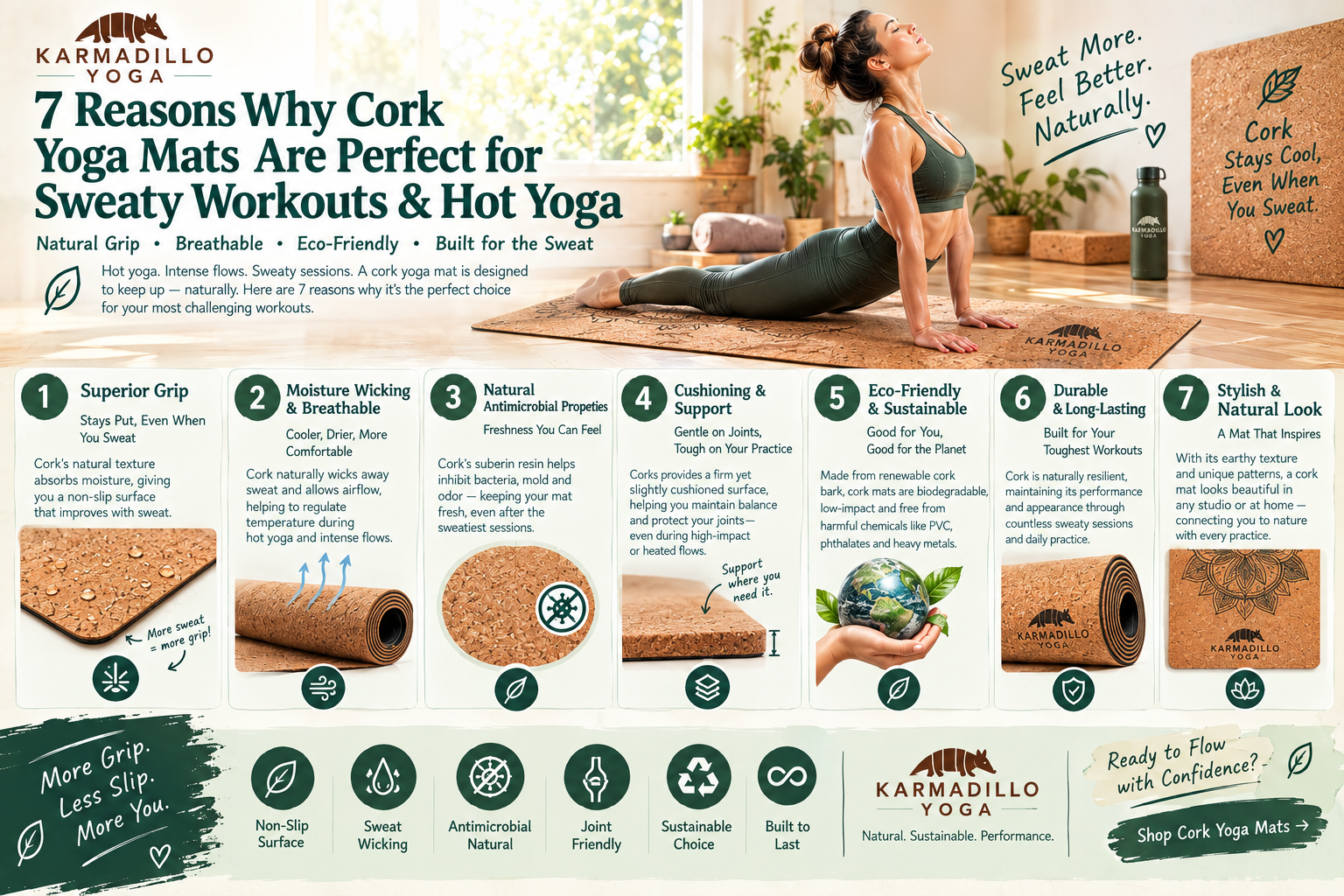

If you have ever stepped into a 105-degree hot yoga studio, powered through a humid Vinyasa flow, or pushed through an intense HIIT cardio workout, you know the frustration of a slippery mat. Traditional synthetic mats made from Polyvinyl Chloride (PVC), Thermoplastic Elastomer (TPE), or smooth closed-cell foam quickly transform into slippery hazards the moment your palms and feet start to sweat.
To combat this, many practitioners resort to placing heavy microfiber towels over their mats. However, towels bunch up, shift during dynamic transitions, and require constant adjustment mid-flow, disrupting your breath, focus, and alignment.
Enter the natural cork yoga mat.
Crafted from the organic outer bark of Mediterranean Cork Oak trees heat-bonded to a heavy-duty natural tree rubber base, cork yoga mats have revolutionized high-sweat fitness routines. Cork possesses unique physical and chemical properties that make it perform better as you sweat more.
In this comprehensive guide, we explore the top 7 reasons why cork yoga mats are the ultimate choice for sweaty workouts, Bikram classes, and heated studio sessions. We will also cover essential care tips, answer common questions, and provide key buying recommendations.
Sweat-Activated Friction: The Power of Suberin
The single most revolutionary feature of a cork yoga mat is its moisture-activated grip. Traditional synthetic mats rely on dry surface friction. When sweat sits on top of plastic or PVC, it creates a hydroplaning layer between your skin and the mat, causing your hands to slide out from under you in poses like Adho Mukha Svanasana (Downward-Facing Dog).
Natural cork contains a unique organic waxy substance called suberin. Suberin is naturally hydrophobic and fire-retardant, acting as the protective shield for cork oak trees in the wild. When exposed to sweat or surface moisture, suberin undergoes a chemical reaction that increases its surface friction coefficient.
Instead of becoming slick, a cork mat becomes grippier as you sweat. The warmer and sweatier your practice gets, the more firmly your hands and feet stay anchored to the mat, giving you complete stability during high-stakes balancing poses and inversions.
No More Towels: Elimination of Studio Towel Distractions
For years, hot yoga practitioners relied on specialized microfiber studio towels to cover their slippery PVC mats. While towels absorb moisture, they introduce a host of new problems:
-
Bunching and Wrinkling: Towels slide across the mat surface during jump-throughs, lunges, and warrior transitions, requiring constant manual smoothing.
-
Extra Laundry Load: Carrying a heavy, sweat-soaked towel home after every single class adds to your weekly laundry routine and environmental footprint.
-
Loss of Floor Bio-Feedback: Thick towels create an unstable, spongy layer between your feet and the floor, reducing tactile feedback and weakening ankle stability.
A natural cork yoga mat completely eliminates the need for a studio towel. Because the organic cork surface manages moisture inherently, you can step onto your mat with clean, uncluttered confidence. You carry less gear to the studio, save energy on laundry, and maintain direct tactile connection with a grounded, firm surface.
Natural Antimicrobial Hygiene: Preventing Odor and Mold
Sweaty studio sessions create a breeding ground for bacteria, fungi, and mold. Closed-cell synthetic mats trap surface moisture, while open-cell foam mats absorb sweat deep into their core where it cannot easily dry, leading to that notorious sour "gym locker" smell over time.
Cork is naturally self-cleaning on a microscopic level. The cellular matrix of cork is densely packed with suberin and natural phenolics that prevent bacteria, mold, mildew, and dust mites from taking root or reproducing.
When sweat lands on a cork mat, the surface dries rapidly without letting organic matter decompose within the fibers. This means your mat remains fresh, clean, and odor-free class after class, even if you practice in high-humidity environments daily.
Heavy-Duty Floor Adhesion: High-Density Tree Rubber Base
A great upper surface is useless if the bottom of the mat slides across the studio floor. High-intensity sweaty workouts—such as Power Vinyasa flows, mountain climbers, burpees, and jump lunges—exert significant lateral force on your mat.
Premium cork mats are engineered with a dual-layer structure: an organic cork top layer heat-bonded to a heavy-duty 100% natural tree rubber base.
Natural tree rubber is exceptionally dense, heavy, and elastic. When laid out on polished studio wood, tile, or concrete floors, the natural rubber base grips the floor with immense traction. It refuses to slide, bunch, or shift, providing a rock-solid anchor that holds its ground during the most explosive movement transitions.
Non-Toxic Sourcing: Free from Off-Gassing Plasticizers
During hot yoga and intense cardio workouts, your heart rate elevates, your body temperature rises, and your respiratory rate increases dramatically. Deep, heavy breathing means you inhale a much larger volume of ambient air—and whatever chemicals are off-gassing from the equipment beneath your face.
Conventional cheap mats made from Polyvinyl Chloride (PVC) rely on chemical plasticizers called phthalates to keep the plastic flexible. When exposed to hot studio temperatures and body heat, PVC mats off-gas Volatile Organic Compounds (VOCs) that emit a harsh chemical odor and can irritate sensitive respiratory airways.
Natural cork mats are 100% non-toxic, hypoallergenic, and free from PVC, phthalates, BPA, or synthetic solvents. When resting your face near the mat in Child's Pose during a 105-degree class, you inhale only the subtle, clean, natural earthy scent of organic cork and natural tree rubber.
Superior Heat Resistance and Surface Temperature Regulation
Synthetic plastics are poor thermal conductors. In a heated studio room or under direct sunlight during outdoor summer park practice, synthetic mats absorb heat and become uncomfortably hot or sticky against bare skin.
Cork is a natural thermal insulator. Its cellular structure consists of millions of microscopic air-filled pockets that resist heat transfer.
-
Neutral Surface Temperature: A cork mat maintains a comfortable, neutral surface temperature even in high-heat studio conditions.
-
No Sticky Skin Effect: Unlike plastic or TPE surfaces that stick uncomfortably to sweaty arms and legs, cork feels smooth, cool, and velvety under skin throughout your entire session.
Outstanding Durability Under Heavy Sweat and Daily Use
Sweat contains natural body salts, acids, and skin oils that break down low-quality materials over time. Synthetic TPE and cheap foam mats frequently stretch, flake, peel, or tear at high-friction pressure points (such as where your toes dig in during Downward Dog or Planks) within a few months of regular heated practice.
High-density organic cork is remarkably resilient. In its natural habitat, cork oak bark protects living trees against forest fires, harsh droughts, and intense Mediterranean weather. When harvested and processed into high-density mats, fine-grain cork withstands daily moisture exposure, heavy body weight compression, and vigorous foot friction without flaking, cracking, or losing its structural form.
Summary Comparison: Cork vs. Traditional Mats in Hot Classes
| Performance Metric | Natural Cork Yoga Mats | Traditional PVC Mats | TPE Synthetic Foam Mats |
| Grip Under Sweat | Increases with sweat (Suberin activated) | Decreases (Requires studio towel) | Decreases (Slippery hazards) |
| Microbial Hygiene | Naturally Antimicrobial | Traps bacteria on surface | Traps sweat in foam pores |
| Odor Resistance | Stays Fresh & Odor-Free | Develops sour odor over time | Retains body sweat smells |
| Floor Traction | High (Dense natural rubber base) | Moderate to High | Low (Lightweight, slides easily) |
| Chemical Off-Gassing | Zero VOCs / 100% Non-Toxic | High (Phthalates & PVC fumes) | Low to Medium |
| Need for Extra Towels | None Required | Mandatory for hot classes | Mandatory for hot classes |
Best Practices for Using a Cork Mat in Hot Yoga
To maximize the performance and longevity of your cork mat during sweaty classes, follow these simple guidelines:
1. Pre-Mist for Instant Grip if Hands Are Dry
If your hands and feet are cold and dry at the start of class before your body begins to sweat, use a fine-mist spray bottle to lightly spray water where your hands and feet land. This immediately activates the suberin layer for instant non-slip traction from your very first Sun Salutation.
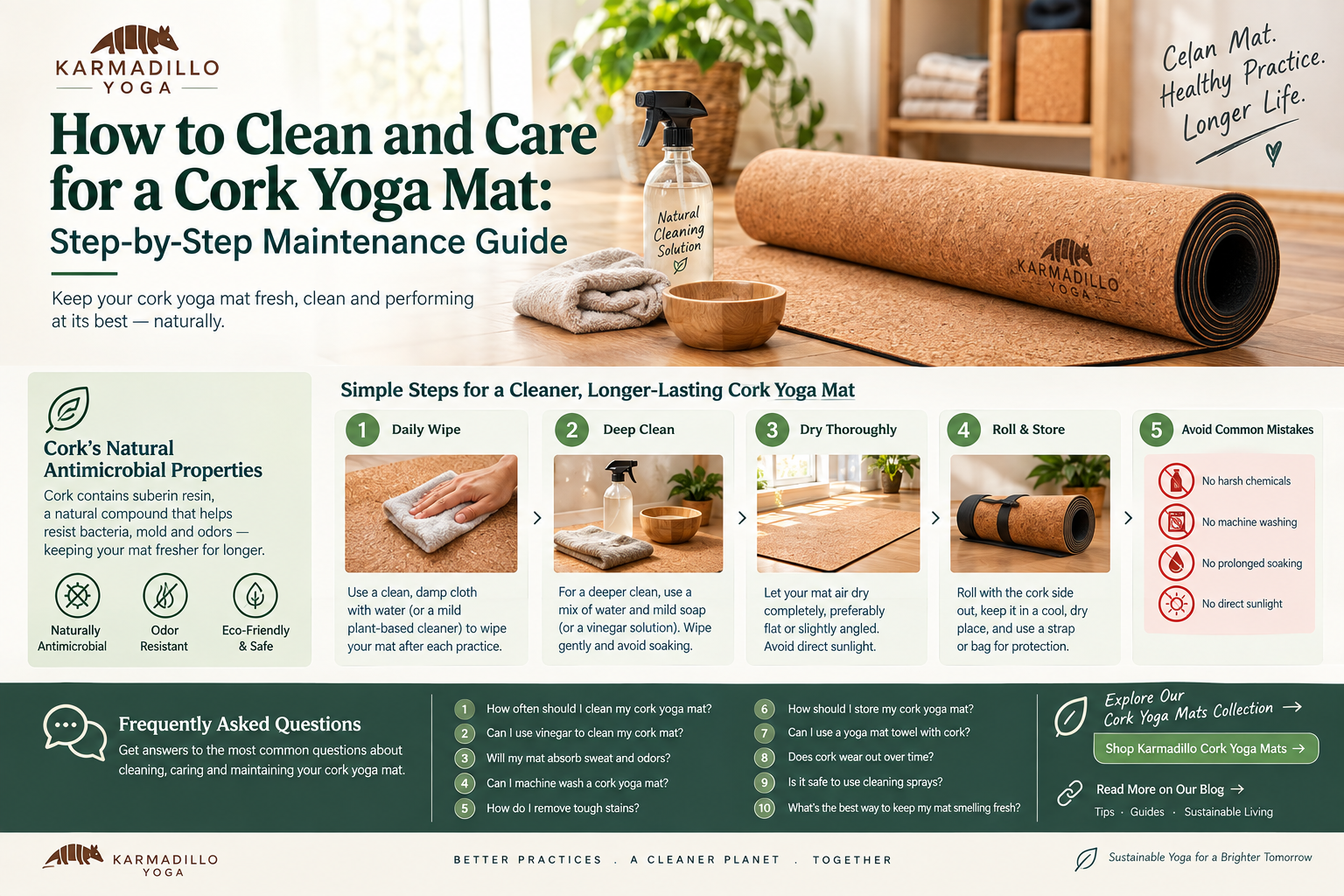
2. Air Dry Fully After Practice
After a heavy sweat session, unroll your mat flat in a shaded, well-ventilated room for 15 to 20 minutes until the surface is completely dry to the touch. Never roll up a damp or sweaty mat for long-term storage.
3. Clean Weekly with a Mild Vinegar Solution
To remove surface skin oils and salt buildup, wipe down your mat weekly using a microfiber cloth dampened with 1 cup of distilled water and a splash of white vinegar. Wipe clean with fresh water and allow to air dry.
4. Roll "Cork Side Out"
Always roll your mat with the cork surface facing OUTWARD and the rubber base facing INWARD. Rolling cork outward keeps the organic fibers under smooth tension, preventing micro-creases and edge curling.
Elevate Your Hot Practice with Karmadillo Yoga
At Karmadillo Yoga, we engineer sustainable, high-performance cork gear out of Austin, Texas. Born in a heated studio class where our founder experienced the game-changing stability of cork for the first time, our mats are crafted specifically for high-sweat flows, hot yoga, and active fitness routines.
Discover Our Flagship Cork Mat Collection:
-
For Precision Geometric Alignment: Try our laser-etched Alignment Grid Cork Yoga Mat.
-
For Spacious Flow & Extra Cushioning: Upgrade to our spacious Blue Moon Cork Mat Luxe Size 6mm.
-
For Versatile Everyday Practice: Experience the classic Blue Moon Cork Yoga Mat.
-
Represent Off the Mat: Grab our breathable, stylish Cork Trucker Hat!
To learn more about our founding journey, eco-friendly standards, and community mission, visit the About Karmadillo Yoga Page or browse our complete store on the Karmadillo All Products Catalog. Stay up to date with fresh wellness guides, studio tips, and pop-up events on the Karmadillo Yoga News Blog.
Frequently Asked Questions (FAQs)
1. Does a cork yoga mat really get grippier as you sweat?
Yes! Natural cork contains suberin, a waxy hydrophobic compound that undergoes a physical friction change when exposed to moisture. The sweatier your hands and feet get, the grippier the mat surface becomes.
2. Do I need to buy a separate yoga towel for hot yoga if I use a cork mat?
No. Cork's moisture-activated grip completely eliminates the need for a separate studio towel, saving you money, laundry effort, and mat setup time.
3. What if my hands are completely dry at the start of hot yoga class?
If your hands and feet are cold and dry before you start sweating, simply spray a fine mist of plain water onto the mat where your hands and feet place for instant non-slip traction.
4. Will hot studio temperatures melt or damage a cork yoga mat?
No. Cork is a natural thermal insulator and heat-resistant material that thrives in heated studio environments without melting, warping, or emitting plastic chemical smells.
5. Does body sweat cause the cork layer to peel off the rubber base?
No. Premium cork mats from Karmadillo Yoga utilize heat-bonding technology with eco-friendly adhesives to fuse the organic cork top layer permanently to the tree rubber base.
6. How do I remove dried sweat salts and body oils from my cork mat?
Wipe the mat down weekly using a soft microfiber cloth dampened with a solution of 1 cup distilled water and 1/4 cup white vinegar. Wipe clean with fresh water and allow to air dry completely.
7. Why does cork smell better than foam mats after sweaty classes?
Cork is naturally antimicrobial due to suberin and natural phenolics. It prevents bacteria and mold from growing within the fibers, stopping sour sweat odors before they start.
8. Is a cork yoga mat heavy to carry to hot yoga classes?
Karmadillo cork yoga mats weigh between 4.5 and 5.5 lbs—lighter than solid dense rubber mats while providing superior floor adhesion and grounding stability.
9. Can I use a cork yoga mat for high-intensity HIIT workouts and cardio?
Yes! The heavy-duty natural tree rubber base anchors firmly to studio floors during explosive movements like mountain climbers, burpees, and jump lunges, while the cork top layer withstands foot friction.
10. How do I contact Karmadillo Yoga for studio wholesale orders or inquiries?
You can contact our Austin team directly via our Contact Us Page or call our local studio line at +1 512-758-2601.
Ready to Upgrade Your Hot Practice? Connect With Karmadillo Yoga Today!
Say goodbye to slippery plastic mats and bunching towels. Upgrade your movement space with sustainable, sweat-activated cork gear built to support your deepest, hottest flows. Whether you are an individual practitioner looking for your forever mat or a studio owner seeking premium wholesale equipment, our team in Austin, Texas is here to assist you!
Business Contact Information & Wholesale Inquiries
-
Company Name: Karmadillo Yoga
-
Business Category: Fitness Equipment Wholesaler & Sustainable Yoga Brand
-
Showroom & Studio Address: 1600 S 1st St, Austin, TX 78704, United States
-
Direct Phone Support: +1 512-758-2601
-
Online Contact Portal: Visit our Contact Us Page
-
Official Website: https://karmadilloyoga.com/
-
Instagram Community: Follow @karmadilloyoga for wellness guides, product drops, and community pop-up events!








We’d love to hear your thoughts!