

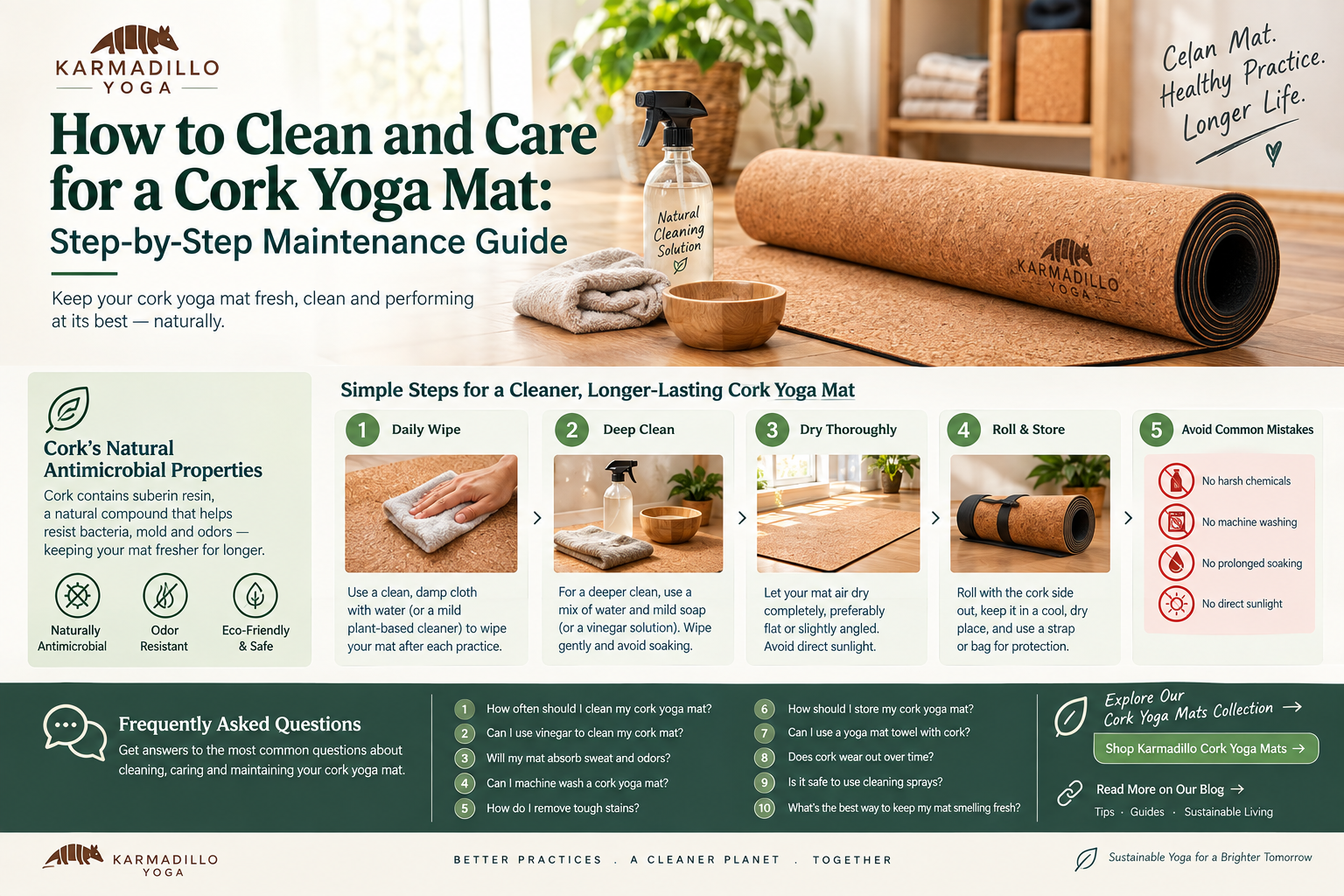

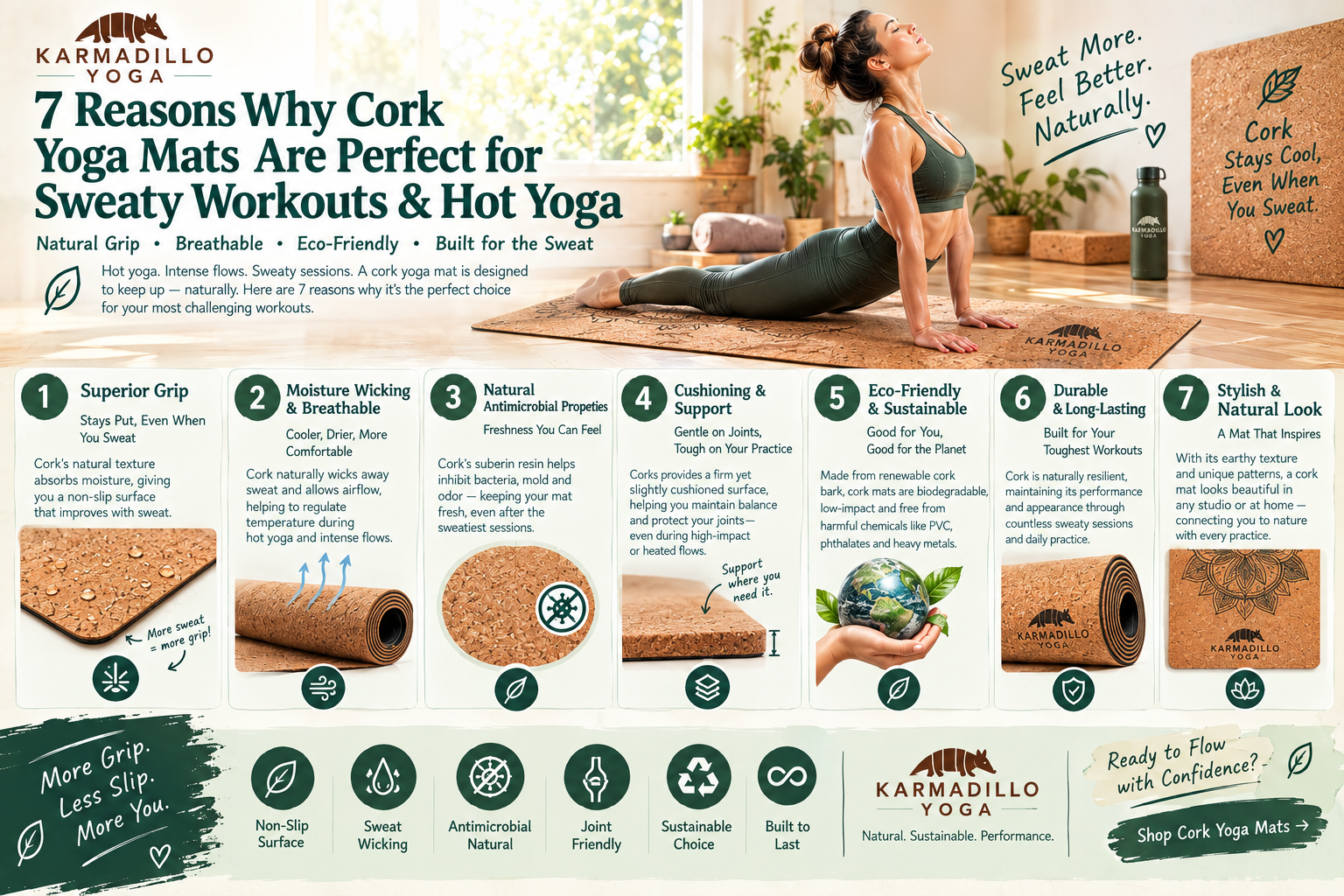
Investing in a high-performance yoga mat cork surface is one of the most rewarding decisions you can make for your practice and the environment. Cork offers an incredible blend of natural cushioning, grounding stability, and a soft, earthy texture that feels remarkable under hand and foot. Even better, cork’s natural cellular structure gives it a unique grip profile: it actually becomes grippier as you sweat, making it a favorite for hot yoga, dynamic Vinyasa flows, and intense cardio sessions.
However, because cork is an organic, living material harvested from the outer bark of the cork oak tree, caring for a cork mat yoga practitioners love requires a slightly different approach than maintaining synthetic PVC, TPE, or basic foam mats.
In this comprehensive, step-by-step care and maintenance guide, we will break down the natural science behind cork’s antimicrobial properties, detail your daily and weekly cleaning routines, share safe deep-cleaning solutions, explain proper rolling and storage techniques, and highlight common mistakes that can shorten your mat’s lifespan.
The Science of Cork: Why It Is Naturally Self-Cleaning
Before diving into maintenance techniques, it helps to understand why a yoga cork mat requires so much less chemical intervention than a plastic or rubber mat.
Cork is composed of millions of microscopic, honeycomb-shaped cells filled with a natural waxy substance called suberin. Suberin acts as a natural barrier for the cork oak tree, rendering the bark hydrophobic (water-resistant), fire-retardant, and naturally resistant to rot, mold, mildew, and bacteria.
How Suberin Protects Your Mat
-
Antimicrobial Protection: Bacteria, fungi, and dust mites cannot easily penetrate or thrive within the dense cellular matrix of cork.
-
Odor Resistance: Because sweat and moisture cannot seep deep into the core of the mat, cork does not trap the lingering, sour "gym locker" smell that plagues synthetic mats over time.
-
Sweat-Activated Traction: Suberin reacts dynamically with moisture. As your hands and feet perspire during practice, the surface friction of the cork increases, giving you unmatched non-slip stability without requiring a separate microfiber towel.
While cork is naturally resistant to microbes, "antimicrobial" does not mean "self-washing." Over time, natural body oils, dead skin cells, lotion residues, and surface dust accumulate on top of the cork layer. Proper cleaning preserves the open texture of the cork so its natural grip remains fully active practice after practice.
Daily Care: What to Do Immediately After Practice
A great maintenance routine begins with simple, consistent habits right after you step off the mat.
1. Let the Mat Air Dry Completely
The single most important rule of cork mat maintenance is to never roll up a damp or sweaty mat.
Even though cork is water-resistant, rolling up a damp mat traps surface moisture between the cork top layer and the natural rubber bottom layer. Over time, trapped moisture can weaken the non-toxic adhesive bond between the layers or create dark moisture spots.
-
Action Step: After your practice, unroll the mat flat on the floor or drape it loosely over a drying rack in a shaded, well-ventilated room for 10 to 20 minutes until the surface is completely dry to the touch.
2. Wipe Down with a Damp Cloth
If you had a light, low-sweat practice, you don't need sprays or soaps. A quick wipe down is all it takes to remove surface dust and skin shedding.
-
Action Step: Take a clean, lint-free microfiber cloth, wet it with cold or lukewarm water, wring out all excess water so it is lightly damp, and gently wipe down the entire surface of the mat from top to bottom.
Weekly Cleaning: The Simple DIY Spray Solution
For regular practitioners who hit the mat three to five times a week, a gentle weekly cleaning keeps the cork surface fresh, vibrant, and free of oil buildup.
The Safe DIY Cleaning Formula
Avoid commercial mat cleaners containing heavy alcohols, harsh detergents, or artificial fragrances, as these can strip the natural suberin from the cork and cause it to dry out or crack.
Ingredients:
-
1 cup distilled water
-
1/4 cup organic white vinegar (a natural disinfectant)
-
2–3 drops of organic essential oil (such as Tea Tree for antibacterial protection, or Lavender/Eucalyptus for a soothing scent)
Instructions:
-
Mix the ingredients in a clean fine-mist spray bottle and shake well.
-
Unroll your Karmadillo cork yoga mat flat on a clean surface.
-
Lightly mist the entire cork surface from about 12 inches away. Do not saturate or soak the mat.
-
Take a soft microfiber cloth or non-abrasive sponge and wipe the surface in smooth, circular motions.
-
Wipe a second time with a cloth dampened only with plain cold water to remove any residual vinegar smell.
-
Allow the mat to air dry completely in the shade before rolling it up.
You can read more eco-friendly wellness and prop maintenance tips on the Karmadillo Yoga Blog.
Deep Cleaning: Restoring Traction After Heavy Sweat Sessions
If you practice Hot Yoga, Bikram, or intense Power Vinyasa daily, body oils and dried sweat salts can gradually form an invisible film over the cork grain, making it feel smoother or slicker when dry. A periodic deep clean restores the mat’s natural tactile grip.
Step-by-Step Deep Cleaning Guide
-
Prepare a Mild Soap Solution: Mix 2 cups of warm water with 2–3 drops of mild, eco-friendly liquid dish soap or castile soap in a bowl.
-
Apply Gently: Dip a clean, soft sponge into the soapy water and wring it out until it is barely damp.
-
Gently Scrub the Cork: Working in small sections, gently wipe down the cork surface. Pay extra attention to high-contact zones where your hands and feet land in Downward-Facing Dog and Warrior II.
-
Rinse Away Soap Residue: Take a fresh cloth saturated with plain cold water and wring it out thoroughly. Wipe down the entire mat two to three times to lift away all soap residue. Leftover soap residue can create a slippery surface.
-
Blot Excess Moisture: Press a dry, absorbent cotton towel firmly against the mat surface to absorb any lingering moisture.
-
Air Dry Fully: Lay the mat completely flat in a cool, shaded area with good airflow for several hours.
How to Properly Roll and Store Your Cork Yoga Mat
How you roll and store your yoga mat cork surface plays a huge role in preventing cracks, creases, and edge curling over the lifespan of the prop.
       CORRECT WAY TO ROLL A CORK YOGA MAT

  [ CORK SURFACE OUT / RUBBER BASE IN ]
  =====================================
  \                                   /
   \   Rolling with cork facing OUT  /
    \  prevents surface creasing!   /
     ==============================
The "Cork Side Out" Rule
Always roll your mat with the cork surface facing OUTWARD and the rubber/latex base facing INWARD.
-
Why? Cork is a fibrous tree bark layer bonded to a flexible rubber base. Rolling with the cork facing outward puts the cork under gentle tension, allowing it to stretch smoothly over the rubber curve. If you roll it with the cork facing inward, the cork layer compresses against itself, which can cause micro-creases, fine surface cracks, or wrinkling over time.
Storage Best Practices
-
Keep Away from Direct Sun: While cork oak trees thrive in the Mediterranean sun, processed cork mats bonded to natural rubber bases should never be left in direct, high-heat sunlight (like the backseat of a hot car in summer). Extreme heat dries out natural rubber, making it brittle and causing the bond to loosen.
-
Store Horizontally or in a Bag: Keep your rolled mat horizontally on a shelf or tucked inside a breathable canvas yoga bag. Storing it vertically in a corner can cause the bottom edges to curl or bend over time.
-
Keep in a Cool, Dry Room: Avoid damp basements, humid bathrooms, or unconditioned garages where excess ambient moisture can linger.
7 Common Maintenance Mistakes to Avoid
To ensure your investment lasts for years, avoid these common practices that can ruin a cork mat yoga design:
-
Never Submerge in Water: Do not put your cork mat in a bathtub, sink, or shower, and never put it in a washing machine. Soaking saturates the rubber base, weakens the eco-adhesive bond, and leads to layer separation.
-
Avoid Concentrated Essential Oils: Applying pure essential oils directly onto the cork can stain the natural wood fibers or create slippery oil patches. Always dilute oils heavily in water.
-
Don't Use Abrasive Scrubbers: Steel wool, stiff bristle brushes, or abrasive scouring pads will scratch, gouge, and erode the fine cork grain.
-
Never Roll It Wet: Rolling up a wet mat traps moisture and causes mildew or rubber degradation.
-
Avoid Harsh Chemical Cleaners: Bleach, ammonia, alcohol-heavy sanitizers, and synthetic disinfectant wipes break down natural rubber and strip the protective suberin from the cork.
-
Don't Fold Your Mat: Never fold your cork mat in half or in quarters like a blanket. Folding creates permanent creases and can break the cork surface. Always roll it smoothly.
-
Skip Body Lotions Before Practice: Applying heavy oil-based body lotions or hand creams right before stepping onto your mat transfers oil directly onto the cork, reducing grip until the mat is washed.
Quick Reference Cleaning Summary
| Cleaning Level | Frequency | Solution / Tools | Key Objective |
| Post-Class Refresh | After every practice | Plain cold water + damp microfiber cloth | Removes surface dust and fresh sweat |
| Weekly Clean | 1–2 times per week | Distilled water + white vinegar + 2 drops essential oil | Disinfects and lifts light body oils |
| Deep Restoration | Once every 1–2 months | Warm water + 2 drops mild castile soap + soft sponge | Lifts heavy oil film and restores maximum grip |
Why Choose Karmadillo Cork Yoga Mats?
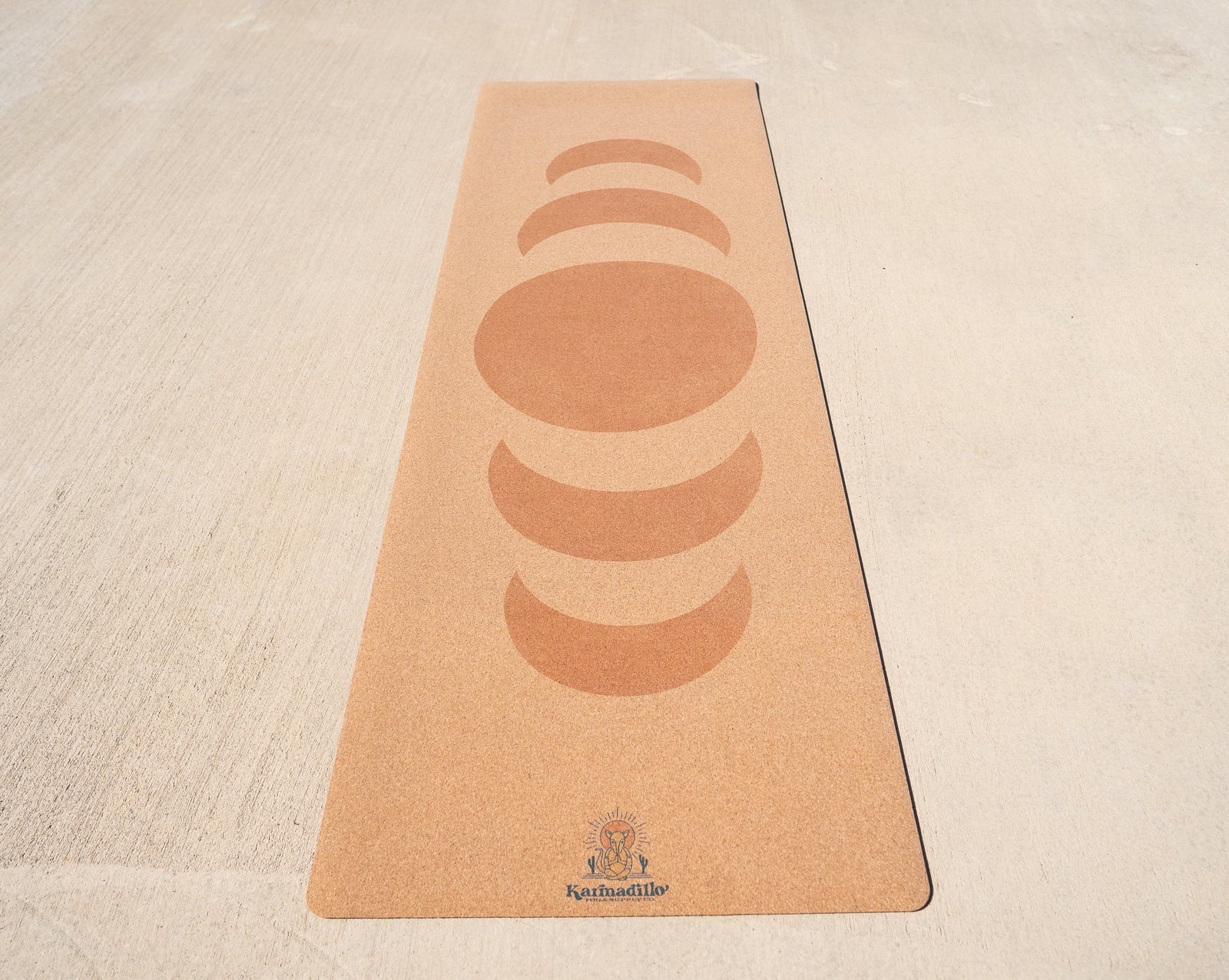
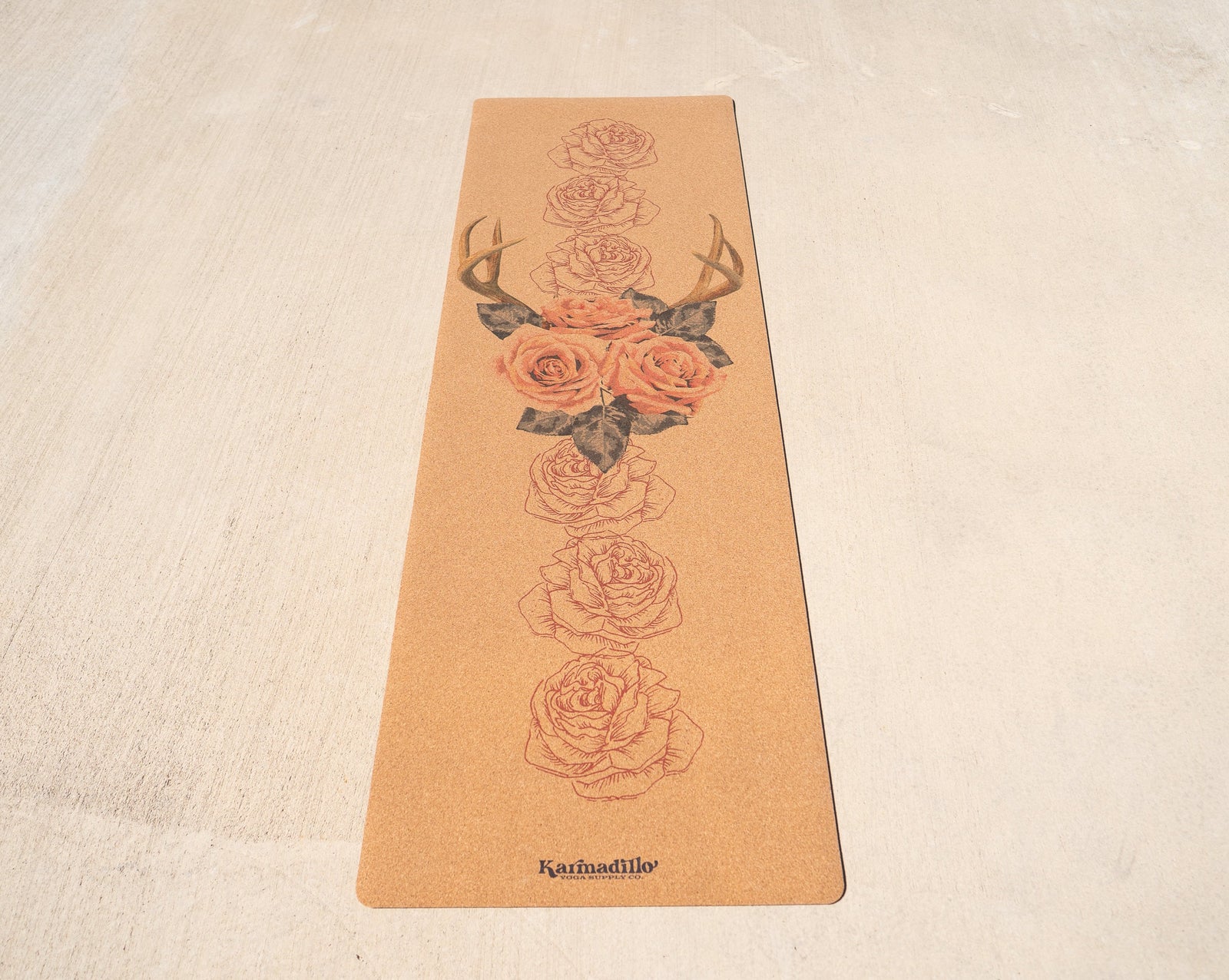
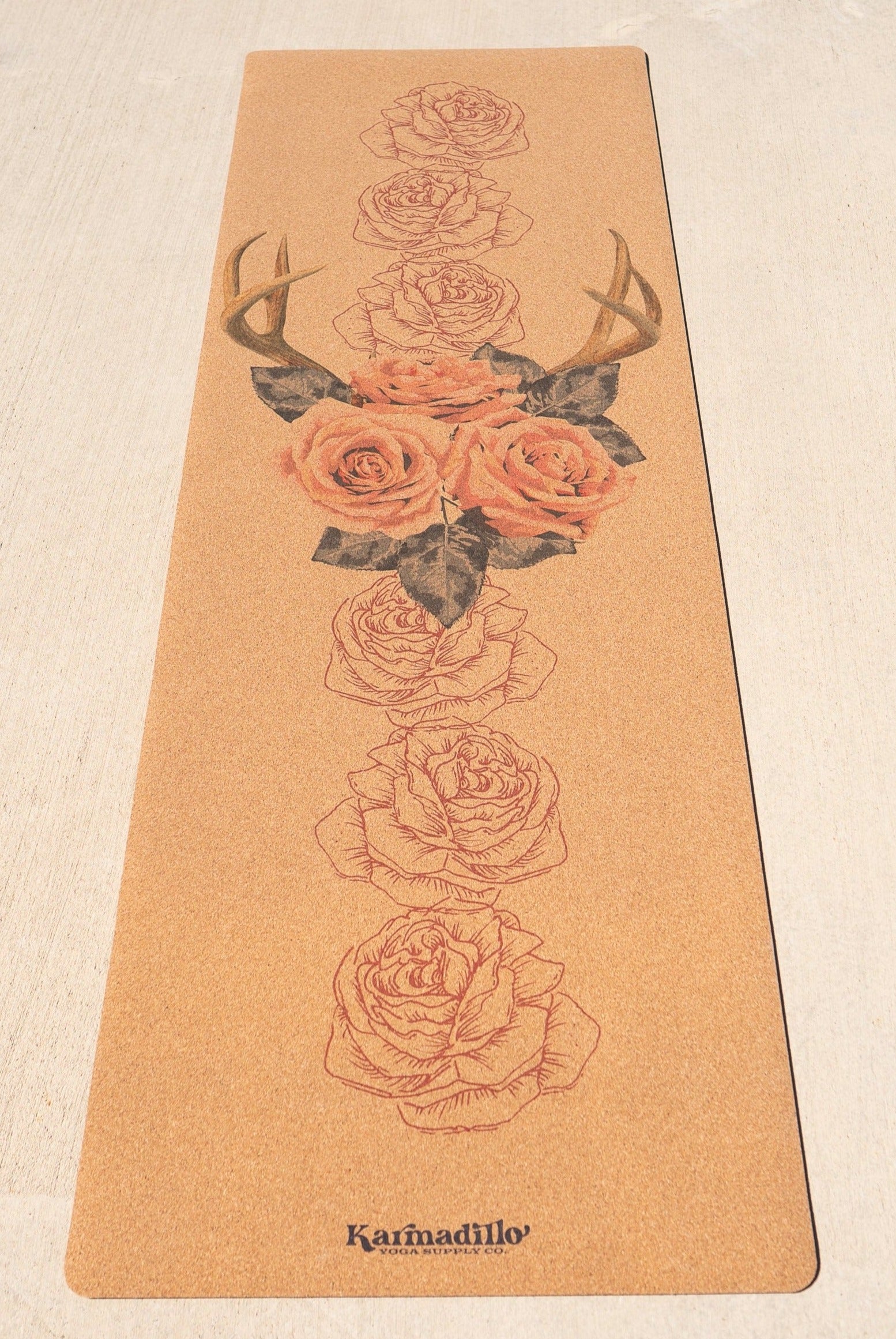
At Karmadillo Yoga, our cork mats are thoughtfully engineered in Austin, Texas, using sustainably harvested organic cork bonded to a heavy-duty, non-toxic natural tree rubber base.
Each limited-edition design is printed with non-toxic, water-based inks that won't fade, bleed, or rub off during deep cleaning. By choosing natural cork, you enjoy a high-performance, non-slip surface that supports your deepest flows while respecting the planet.
Explore our full collection of eco-friendly mats and props on the Karmadillo Yoga Collections Page!
Frequently Asked Questions (FAQs)
1. How often should I clean my yoga mat cork surface?
Give your mat a quick wipe with a damp cloth after every practice. If you practice daily, use a diluted vinegar mist spray once a week, and perform a deeper soapy water wipe-down once every month or two.
2. Can I use rubbing alcohol or lysol wipes on my cork yoga mat?
No. High concentrations of alcohol, bleach, or harsh chemical disinfectants break down natural rubber, dry out the cork fibers, and dissolve the natural suberin wax that gives cork its anti-slip properties.
3. Why is my cork yoga mat slippery when my hands are completely dry?
Cork traction is moisture-activated! The suberin in cork increases its grip when damp. If your hands and feet are cold and dry at the beginning of class, lightly mist the top and bottom of your mat with a water spray bottle for instant non-slip traction.
4. Is it normal for my cork mat to darken over time?
Yes. Cork is a natural wood-like fiber, and like all organic materials, it will develop a soft, natural patina over time as it absorbs tiny amounts of natural skin oils. This darkening is purely cosmetic and does not affect the performance of the mat.
5. How do I remove stubborn stains or body oil spots from cork?
Create a gentle cleaning paste using 1 tablespoon of baking soda and a few drops of water. Apply the paste gently to the stained spot with a microfiber cloth, let it sit for 3 minutes, then wipe clean with a damp cloth and air dry.
6. Can I use my cork yoga mat outdoors on grass or dirt?
Yes! Cork mats are durable and perform great outdoors. Just make sure the ground is free of sharp rocks or twigs that could puncture the rubber base, and avoid leaving the mat in direct mid-day sunlight for long periods.
7. How long will a quality cork yoga mat last?
With proper care, gentle cleaning, and correct rolling (cork side out), a high-quality cork mat from Karmadillo Yoga can last between 3 to 5 years of regular daily practice.
8. Does a new cork yoga mat have a chemical smell?
No. Unlike synthetic PVC or TPE mats that off-gas plastic fumes, new cork mats have a pleasant, subtle woody aroma from the natural cork and tree rubber. Any fresh natural rubber scent dissipates within a few days of unrolling.
9. What should I do if my cork mat gets accidentally soaked in rain?
Unroll the mat completely flat on a clean towel in a shaded, well-ventilated room. Allow it to air dry naturally for 24 to 48 hours until both the cork top layer and rubber base are 100% dry before rolling it up.
10. Which way should I roll my cork mat for storage?
Always roll your mat with the cork surface facing OUTWARD. This protects the cork layer from micro-cracks, surface creasing, and corner curling.
Keep Your Practice Grounded and Clean
Taking care of your cork yoga mat doesn't require complex routines or expensive products. With a simple post-class wipe, a gentle weekly vinegar mist, and proper rolling habits, your mat will deliver non-slip, antimicrobial performance for years to come.
Ready to upgrade your practice space? Browse our full range of sustainable, limited-edition mats and props at Karmadillo Yoga today!








We’d love to hear your thoughts!