


Choosing a new yoga mat is one of the most personal and impactful decisions a movement practitioner can make. A great mat serves as your daily foundation it cushions your joints, anchors your balance, stabilizes your spine, and protects your body against hard, unyielding floors. As cork yoga mats continue to rise in popularity due to their natural antimicrobial hygiene, velvety texture, and sweat-activated traction, buyers are often faced with a critical technical choice:
Which mat thickness and density is right for my body type, joint health, and practice style?
Yoga mats are not one-size-fits-all. A mat that feels perfectly cushioned for a gentle restorative or Yin class might feel spongy, unstable, and frustrating during standing balancing postures like Vrksasana (Tree Pose) or Ardha Chandrasana (Half Moon Pose). Conversely, an ultra-thin travel mat designed for easy packing can cause sharp knee and wrist pain during low lunges or planks if used directly on hardwood floors.
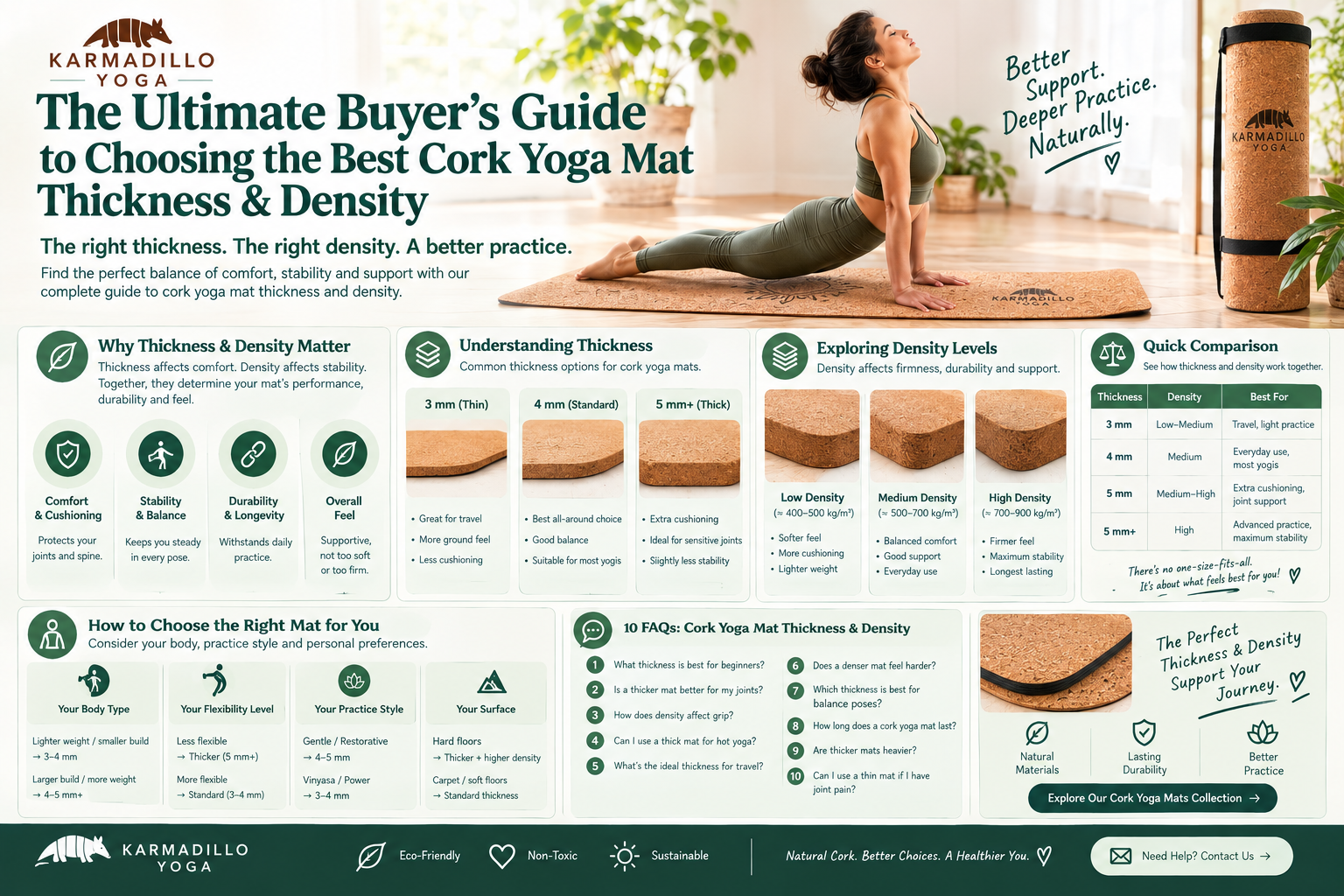
In this comprehensive buyer’s guide, we will break down the material science of cork mat construction, compare standard thickness profiles (1.5mm travel, 3.5mm to 4.5mm studio standard, and 6mm extra-cushioned luxe sizes), explore the vital role of rubber base density, examine key anatomical considerations, and provide actionable buying tips to help you select the ultimate cork mat for your practice.
Why Thickness and Density Matter in Yoga Mat Science
When evaluating any yoga mat, two distinct physical parameters dictate how the surface feels and responds beneath your hands, feet, knees, and spine: Thickness (measured in millimeters) and Density (measured in mass per volume, or structural firmness). While many buyers focus solely on thickness numbers, density is equally important for long-term comfort and joint safety.
Thickness: The Primary Shock Absorber
Thickness determines the vertical distance between your body and the hard floor beneath your mat. It acts as the primary shock absorber for weight-bearing joints during movement and static holds.
-
Too Thin (Under 2mm): Transfers impact energy directly to your bones, making kneeling poses like Anjaneyasana (Low Lunge) or seated folds uncomfortably hard on bare floors.
-
Too Thick with Low Density (Over 6mm Foam): Creates a "marshmallow effect" where your ankles, wrists, and metatarsals sink excessively. This sinkage throws off your alignment, strains joint ligaments, and makes standing balances difficult to maintain.
Density: The Structural Anchor
Density determines how firm or squishy the mat feels when compressed under load. A high-density mat provides immediate resistance when point pressure is applied.
-
Low-Density Mats (Standard PVC & TPE Foam): Contain trapped air bubbles that collapse completely under point pressure (such as a heel, elbow, or knee), offering poor joint protection despite looking thick on paper.
-
High-Density Mats (Organic Cork + Natural Tree Rubber): Maintain their structural integrity under full body weight, offering firm, unyielding support that preserves balance, protects joints, and provides clear sensory bio-feedback to your nervous system.
Comparing Cork Yoga Mat Thickness Profiles
Cork yoga mats are engineered by heat-bonding a renewable organic cork top layer to a heavy-duty natural tree rubber base. The total thickness of the mat is determined primarily by the rubber foundation underneath. Let us examine the three main thickness categories available on the market today:
A. Travel Thickness: 1.5mm to 2.5mm
Ultra-thin cork mats are designed specifically for practitioners on the move. They can be tightly rolled or folded into a compact square to fit easily inside a carry-on suitcase, backpack, or tote bag.
-
Pros: Exceptionally lightweight (under 3.5 lbs), highly portable, and ideal as a hygienic, personal non-slip top layer over shared studio mats.
-
Cons: Minimal cushioning. Unsuitable for extended practice directly on hardwood or concrete floors if you have sensitive knees, wrists, or hip bones.
-
Best For: Frequent travelers, digital nomads, commuters, and yogis using them as studio mat toppers.
B. Standard Studio Thickness: 3.5mm to 4.5mm
This is the "Goldilocks" range for general yoga practice. A 3.5mm to 4.5mm cork mat offers an optimal balance between joint protection, comfortable floor feedback, and manageable carrying weight.
-
Pros: Provides sufficient cushioning to protect knees and ankles during lunges while keeping your feet firmly grounded during standing balance postures. Weighs a manageable 4.5 to 5.5 lbs, making it easy to carry to your local studio.
-
Cons: Might require extra knee padding for practitioners with severe joint arthritis or past joint injuries during long-held floor poses.
-
Best For: Vinyasa Flow, Hatha, Ashtanga, Power Yoga, Hot Yoga, and general studio or home practice.
C. Extra-Cushioned / Luxe Thickness: 5.0mm to 6.0mm
Luxe size cork mats increase the natural rubber base depth to 5.0mm or 6.0mm, providing premium plush support without sacrificing surface stability.
-
Pros: Maximum joint protection. Cradles hip bones, spine, elbows, and knees during long-held floor postures while keeping the feet steady thanks to the heavy-duty rubber core.
-
Cons: Slightly heavier (around 6.5 to 7.5 lbs), making them best suited for home studios, dedicated workout spaces, or short drives to class.
-
Best For: Yin Yoga, Restorative practices, Pilates, HIIT conditioning, floor stretching, and practitioners with joint sensitivity or past injuries.
The Vital Role of the Natural Rubber Base in Cushioning
The top layer of a cork mat provides velvety, sweat-activated friction, but the bottom rubber base provides the structural performance engine.
Synthetic mats often rely on lightweight PVC or TPE foam bases. These synthetic foams are filled with microscopic air bubbles that collapse when compressed. When you place a heel, elbow, or knee on a foam mat, you push straight through the air pockets to the hard floor beneath—a phenomenon known as "bottoming out".
In contrast, high-quality cork mats utilize 100% high-density natural tree rubber. Natural rubber is heavy, elastic, and dense. It resists localized compression, distributing your body weight evenly across a wider surface area. This means a 4.5mm cork mat backed with natural tree rubber offers significantly better real-world joint cushioning than a 6mm synthetic foam mat!
Thickness & Density Selection Matrix
Use this detailed selection matrix to match your physical profile, joint health, and practice environment to the ideal mat specification:
| Practitioner Profile | Recommended Thickness | Recommended Base Density | Ideal Mat Model Choice |
| Daily Vinyasa & Hot Yoga | 3.5mm – 4.5mm | High-Density Tree Rubber | Standard Cork Yoga Mat |
| Joint Sensitivity / Knee Pain | 5.0mm – 6.0mm | Extra High-Density Rubber | Luxe Size 6mm Cork Mat |
| Yin & Restorative Yoga | 5.0mm – 6.0mm | Medium to High Density | Luxe Size 6mm Cork Mat |
| Frequent Traveler / Commuter | 1.5mm – 2.5mm | Compact Rubber Base | Travel Cork Overlay Mat |
| Pilates & Bodyweight HIIT | 5.0mm – 6.0mm | High-Density Heavy Rubber | Luxe Size 6mm Cork Mat |
| Taller / Broader Frame Yogis | 4.5mm – 6.0mm | High-Density Heavy Rubber | Alignment Grid / Luxe Mat |
Additional Key Buying Factors: Size, Alignment, and Texture
Beyond thickness and density, pay close attention to these essential structural details when investing in a high-performance cork yoga mat:
Surface Dimensions (Length & Width)
Standard yoga mats measure 68 inches long by 24 inches wide. However, taller practitioners or those who love spacious flows often find standard dimensions restrictive, forcing their hands or feet off the mat during wide lunges. Look for mats that offer extra length (72+ inches) and width (26+ inches) so your entire body remains comfortably on the mat during full extensions.
Precision Laser Alignment Lines
For beginners and advanced yogis alike, surface alignment grids provide essential visual cues for body geometry. Laser-etched alignment markers help you calibrate foot placement in lunges, square your hips in Warrior poses, center your spine in floor postures, and keep your hands evenly spaced in Downward Dog.
Fine-Grain vs. Coarse-Grain Cork
Look for mats crafted from fine-grain organic cork. Fine-grain cork is sanded down to a silky, velvety finish that feels soft under bare skin while maximizing sweat traction. Coarse-grain cork uses large chunks that can feel rough or scratchy and are far more prone to chipping or flaking over time.
How to Care for Your Cork Yoga Mat
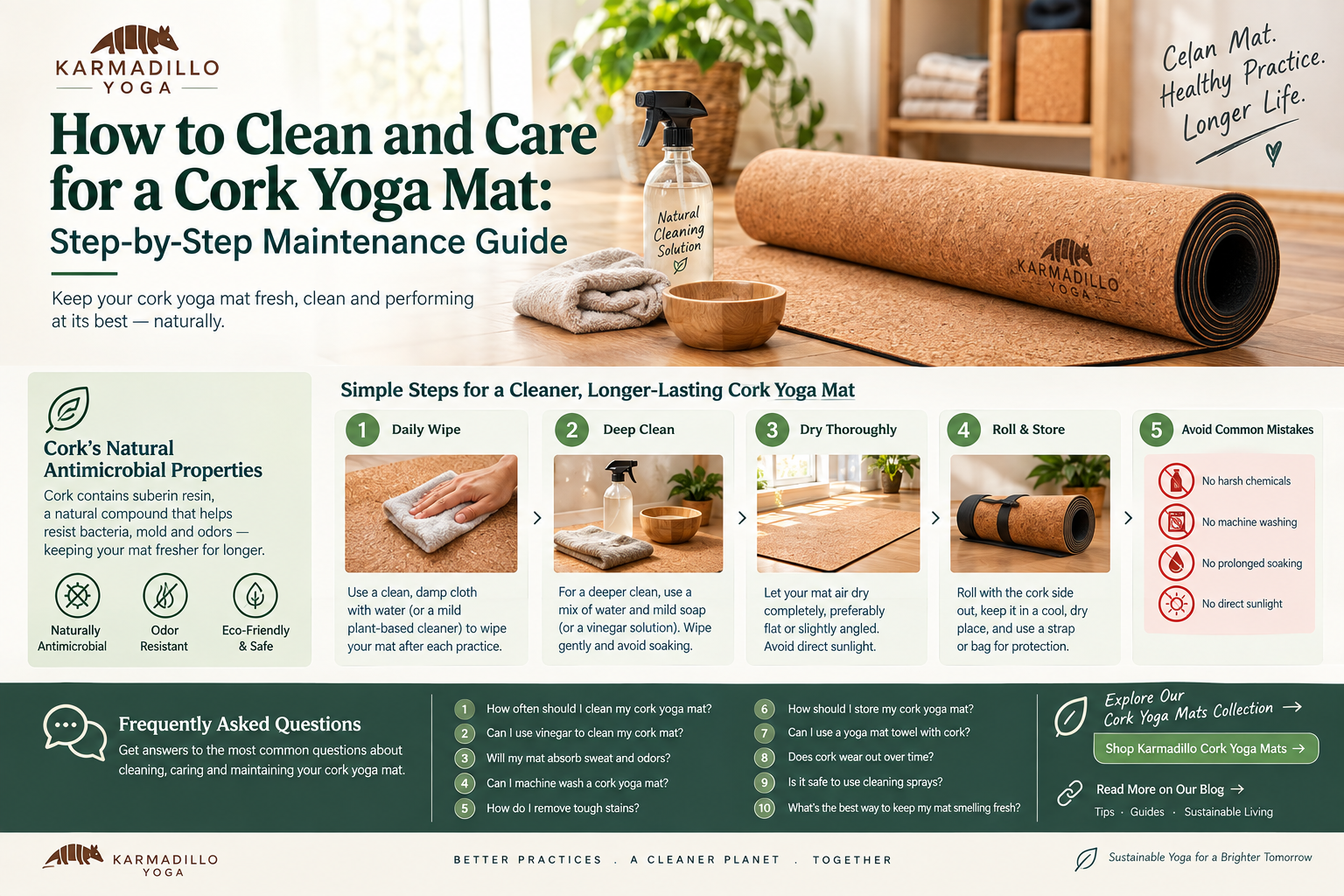
To ensure your cork mat retains its firm cushioning, vibrant appearance, and non-slip traction for years, follow these simple maintenance best practices:
-
Air Dry After Sweaty Workouts: Never roll up a wet or sweaty mat. Unroll it flat in a shaded, well-ventilated room for 15 minutes until surface moisture dries completely.
-
Wipe with Natural Water/Vinegar Mist: Clean weekly using a soft microfiber cloth dampened with distilled water and a splash of white vinegar. Avoid harsh chemical sprays, bleach, or high concentrations of essential oils.
-
Roll "Cork Side Out": Always roll your mat with the cork surface facing OUTWARD and the rubber base facing INWARD. Rolling cork facing outward puts the organic fibers under gentle tension, keeping the surface smooth and preventing micro-creases or corner curling.
Discover the Karmadillo Yoga Difference
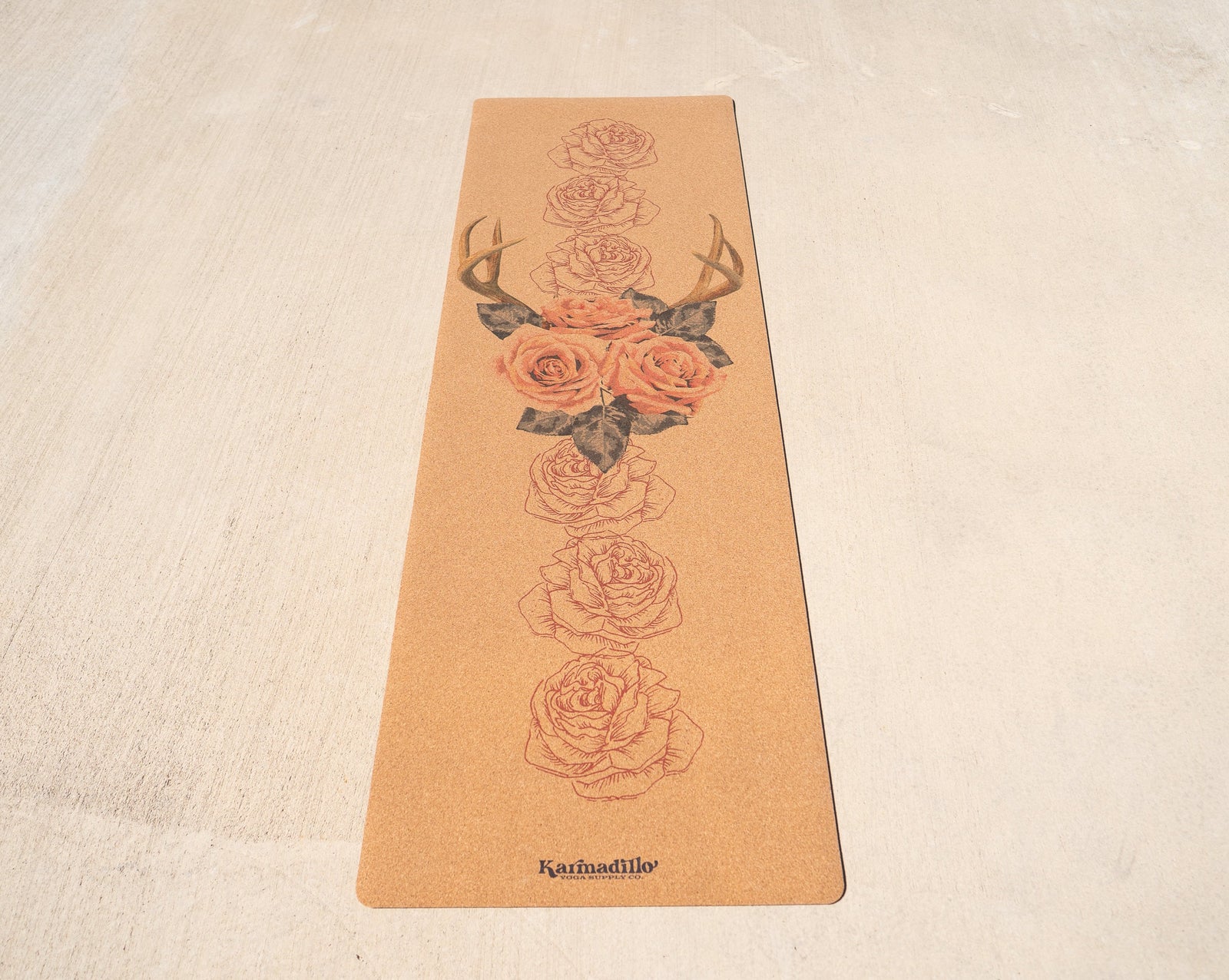
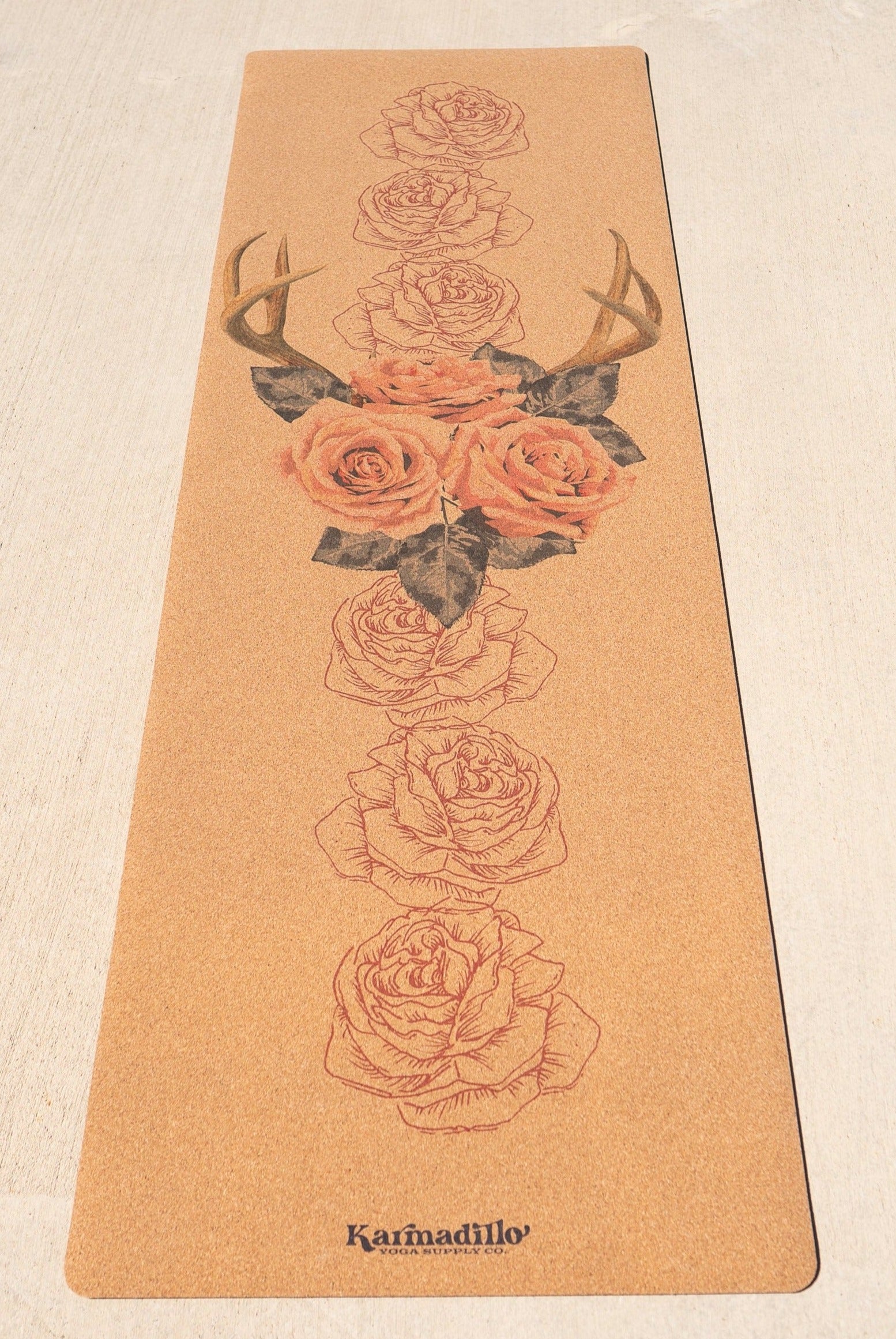
At Karmadillo Yoga, we engineer sustainable, high-performance cork gear out of Austin, Texas. Our mats combine premium Mediterranean organic cork with heavy-duty natural tree rubber bases, delivering the perfect balance of joint protection, floor grip, and artistic design.
Explore Our Core Collection:
-
For Precision & Geometric Alignment: Try our laser-etched Alignment Grid Cork Yoga Mat.
-
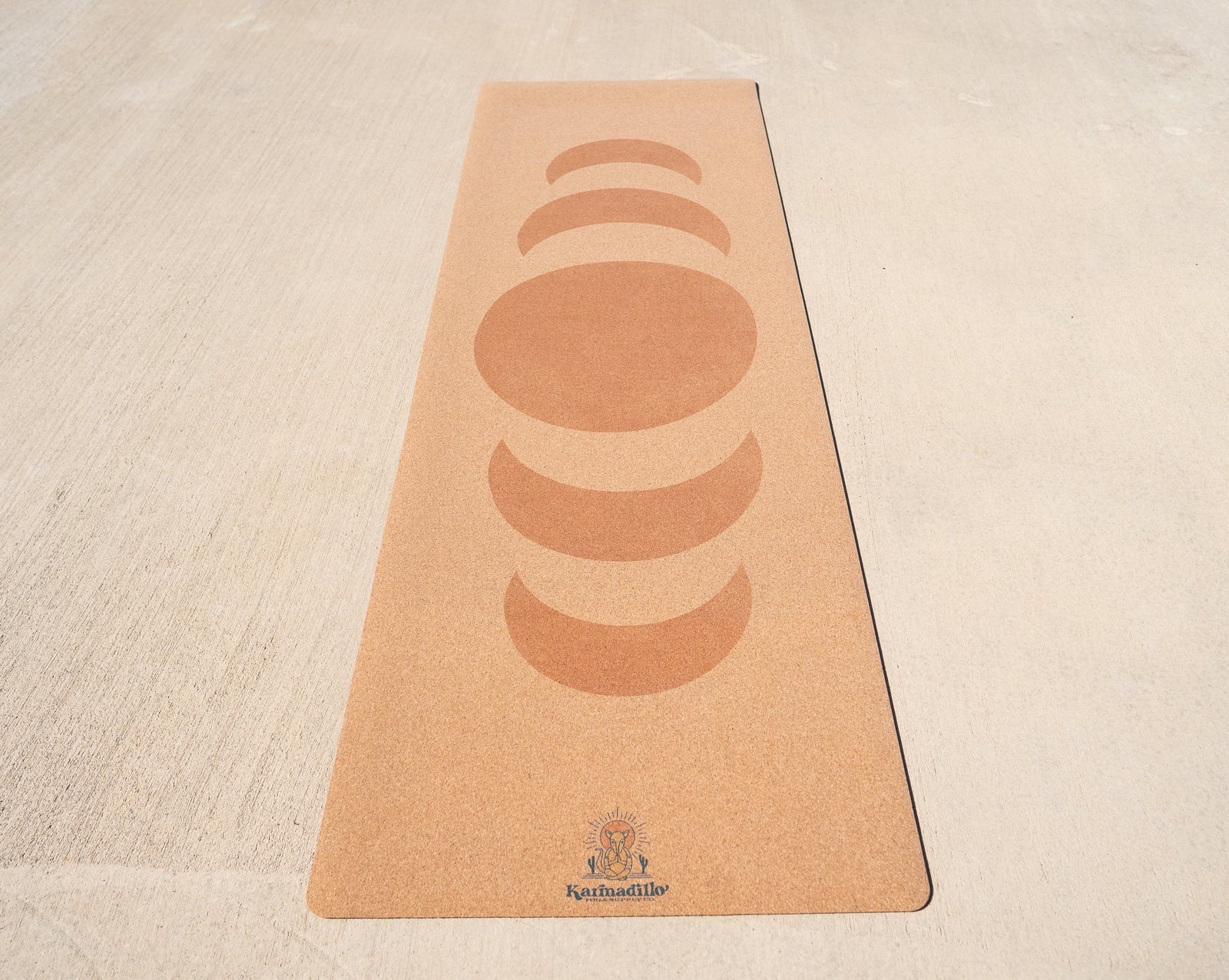
For Maximum Cushioning & Spacious Flow: Upgrade to our spacious Blue Moon Cork Mat Luxe Size 6mm.
-
For Classic Studio Practice: Experience the versatile, lightweight Blue Moon Cork Yoga Mat.
-
Represent the Community Off the Mat: Grab our stylish, breathable Cork Trucker Hat!
To learn more about our founding mission, eco-friendly standards, and community events, visit the About Karmadillo Yoga Page or browse our complete store on the Karmadillo All Products Catalog. Stay up to date with fresh wellness tips, class guides, and pop-up events on the Karmadillo Yoga News Blog.
Frequently Asked Questions (FAQs)
1. What is the best cork yoga mat thickness for beginners?
A 3.5mm to 4.5mm cork mat is ideal for beginners. It provides reliable joint cushioning without feeling squishy or wobbly during standing balance poses.
2. Does a 6mm cork yoga mat make balancing harder?
Not if it has a high-density natural rubber base! Unlike squishy foam mats that sink, high-density rubber 6mm cork mats stay firm underfoot, preserving balance while cradling joints.
3. Are thicker cork yoga mats heavier to carry to class?
Yes. A 3.5mm mat weighs around 4.5 to 5 lbs, while a 6mm luxe mat weighs about 6.5 to 7.5 lbs due to the extra natural tree rubber base.
4. Can I use a 6mm cork yoga mat for Pilates and HIIT workouts?
A 6mm cork mat is perfect for Pilates and bodyweight conditioning because it cushions hip bones and spine during floor work while resisting shoe friction.
5. Will the cork layer peel or delaminate from a thick mat over time?
No. High-quality cork mats use heat-bonding technology with non-toxic adhesives to fuse the organic cork top layer permanently to the tree rubber base.
6. Is a thin travel cork mat thick enough to use on hardwood floors?
Travel mats (1.5mm to 2.5mm) have minimal cushioning. On hardwood floors, they are best used as a hygienic non-slip overlay on top of a studio mat.
7. How does rubber density affect knee pain during low lunges?
High-density natural tree rubber absorbs point pressure without bottoming out, preventing your knees from pressing directly against the hard floor.
8. Are Karmadillo cork yoga mats eco-friendly and non-toxic?
Yes! Our mats are 100% non-toxic, free from PVC, phthalates, and synthetic solvents, and crafted from sustainably harvested renewable cork and natural tree rubber.
9. Which way should I roll my cork yoga mat for storage?
Always roll your mat with the cork surface facing OUTWARD. This prevents micro-cracking and keeps the edges laying completely flat when unrolled.
10. How can I contact Karmadillo Yoga for studio wholesale orders?
You can contact our Austin studio team via our Contact Us Page or call us directly at +1 512-758-2601.
Ready to Find Your Perfect Mat? Connect With Karmadillo Yoga Today!
Upgrade your movement practice with sustainable, high-density cork gear engineered for performance, durability, and comfort. Whether you need a standard studio mat or a luxe 6mm cushioned workspace, our team in Austin, Texas is here to assist you!
Business Contact Information & Wholesale Inquiries
-
Company Name: Karmadillo Yoga
-
Business Category: Fitness Equipment Wholesaler & Sustainable Yoga Brand
-
Showroom & Studio Address: 1600 S 1st St, Austin, TX 78704, United States
-
Direct Phone Line: +1 512-758-2601
-
Online Contact Portal: Visit our Contact Us Page
-
Official Website: https://karmadilloyoga.com/
-
Instagram Community: Follow @karmadilloyoga for wellness guides, product drops, and community pop-up events!








We’d love to hear your thoughts!