


Whether you are unrolling your mat for a daily Vinyasa flow, settling into a deep Yin stretch, or pushing your limits in a 105-degree hot yoga studio, your yoga mat is the foundation of your movement practice. A great mat cushions your joints, anchors your feet, supports your spine, and prevents dangerous slips during weight-bearing poses.
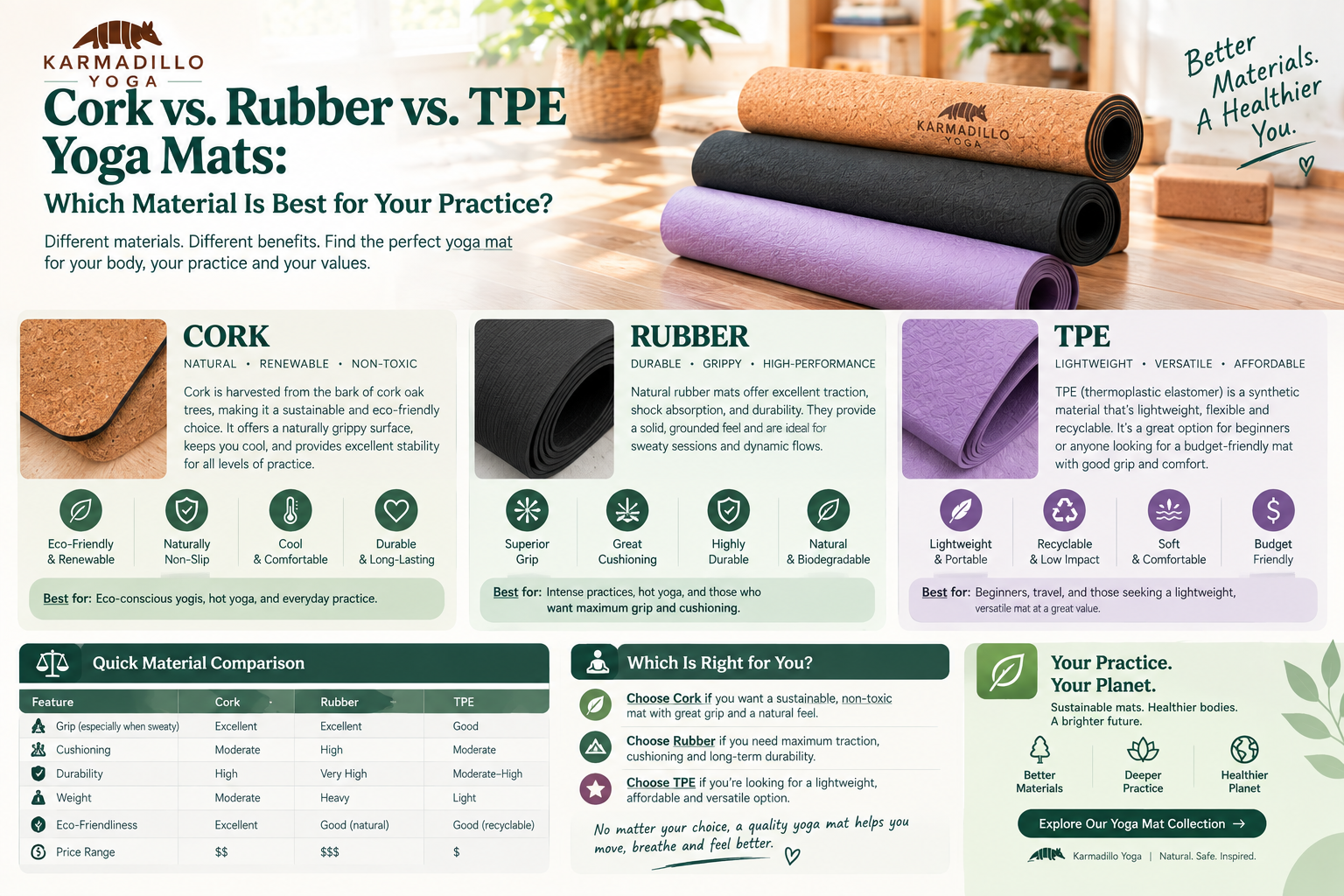
However, choosing the right yoga mat has become increasingly complex. The market is saturated with different materials and marketing claims. Today, three materials dominate the conversation among eco-conscious practitioners and studio owners: Natural Cork, Tree Rubber, and TPE (Thermoplastic Elastomer).
Each material possesses distinct physical characteristics, cushioning density, environmental footprints, and grip behaviors under sweat. In this material guide, we break down the performance, durability, maintenance, and eco-friendliness of cork, natural rubber, and TPE yoga mats so you can make an informed decision for your unique body and practice.
How Mat Material Impacts Movement Mechanics
Before evaluating individual materials, it helps to understand how mat physics affects your body during yoga and fitness routines. A yoga mat interacts with your anatomy in three critical ways:
Traction and Friction Coefficient
Traction determines how securely your hands and feet stay anchored during poses like Adho Mukha Svanasana (Downward-Facing Dog) or Virabhadrasana II (Warrior II). Dry friction is easy for most materials, but wet friction—how the mat behaves when exposed to perspiration—varies dramatically across materials.
Cushioning Density and Joint Protection
Cushioning is not just about softness; it is about density and rebound. A mat that is too soft causes your wrists and ankles to sink excessively, creating joint instability during standing balances. Conversely, a mat that is too hard can cause pain in the knees and hip bones during floor postures.
Bio-Feedback and Grounding
The texture and firmness of your mat send tactile signals to your central nervous system. A firm, grounded surface provides clear bio-feedback, helping your brain calibrate balance and spatial awareness far more effectively than a spongy synthetic surface.
Natural Cork Yoga Mats: The Sustainable Performance Leader
Harvested from the renewable outer bark of Mediterranean Cork Oak trees (Quercus suber), cork yoga mats have revolutionized modern movement gear. They pair an organic cork surface with a heavy-duty, non-slip natural tree rubber base.
The Science of Suberin: Sweat-Activated Grip
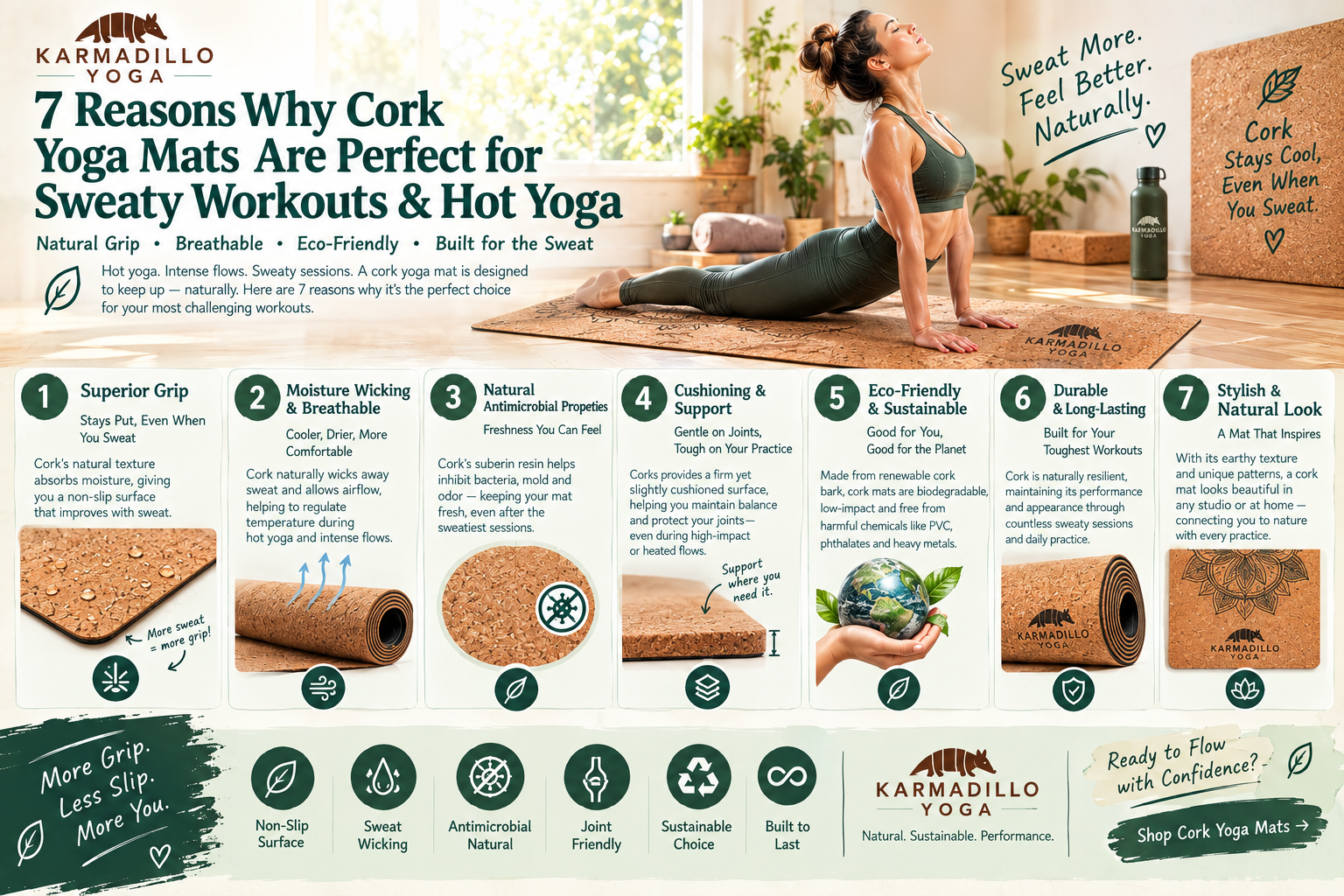
The most remarkable property of natural cork is its reaction to moisture. Cork contains a waxy, hydrophobic substance called suberin. Unlike synthetic mats that become slick when exposed to perspiration, suberin causes cork's friction coefficient to increase when wet. The sweatier your hands and feet get during dynamic Vinyasa or Hot Yoga, the grippier the surface becomes. This completely eliminates the need for a separate studio towel.
Natural Antimicrobial Hygiene
Cork's microscopic honeycomb cellular structure is inherently antimicrobial and resistant to mold, mildew, and dust mites. It naturally repels sweat salts and body oils, preventing the sour "gym locker" odor that plagues plastic mats over time.
Environmental Sustainability and Carbon Negative Sourcing
Cork is one of the most eco-friendly materials on Earth. Cork oak trees are never cut down during harvesting; their outer bark is hand-stripped every 9 to 12 years. Stripping the bark causes the tree to absorb 3 to 5 times more carbon dioxide from the atmosphere as it regenerates its outer layer. Furthermore, natural cork is 100% natural, recyclable, and fully biodegradable.
Tactile Feeling and Aesthetic Appeal
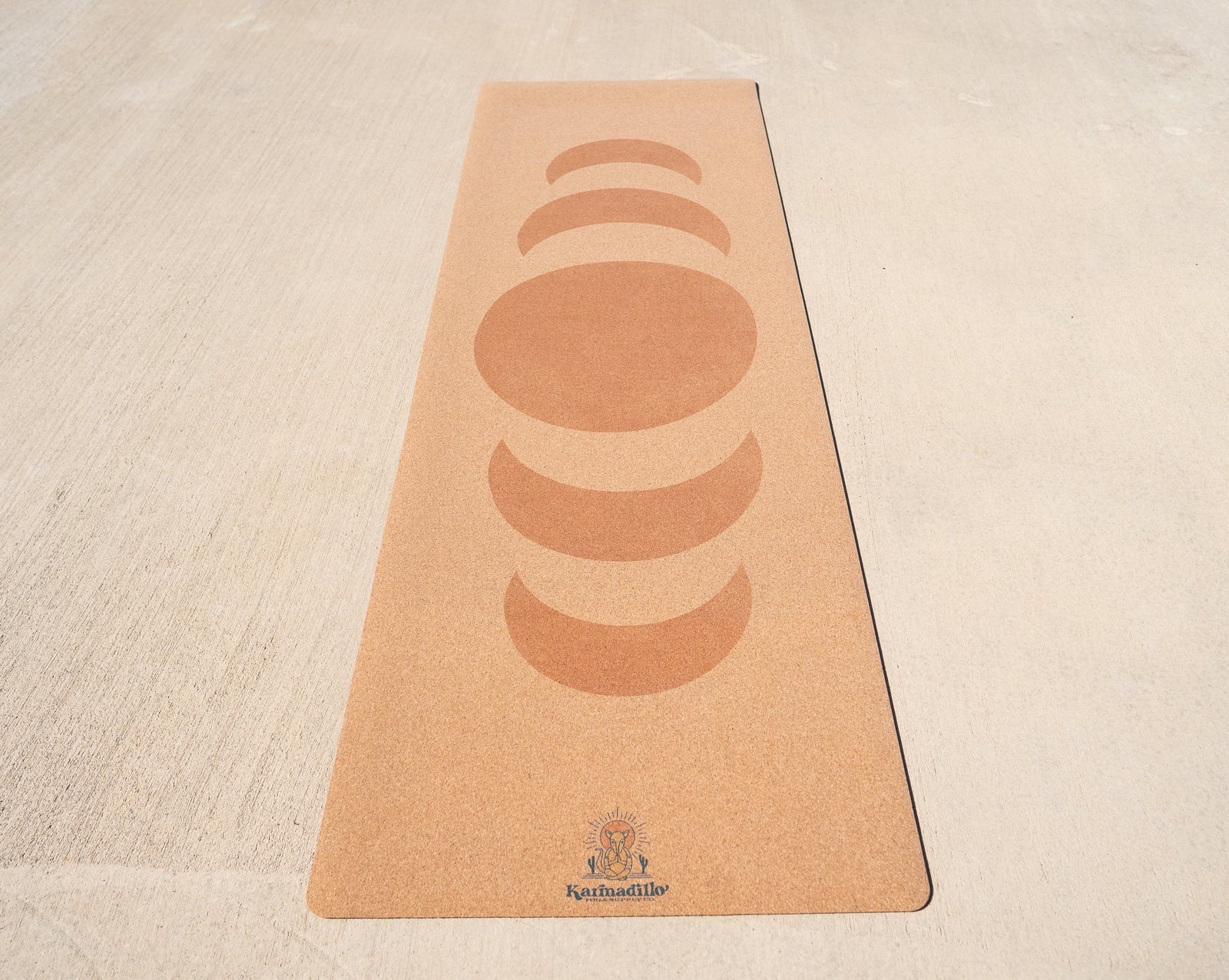
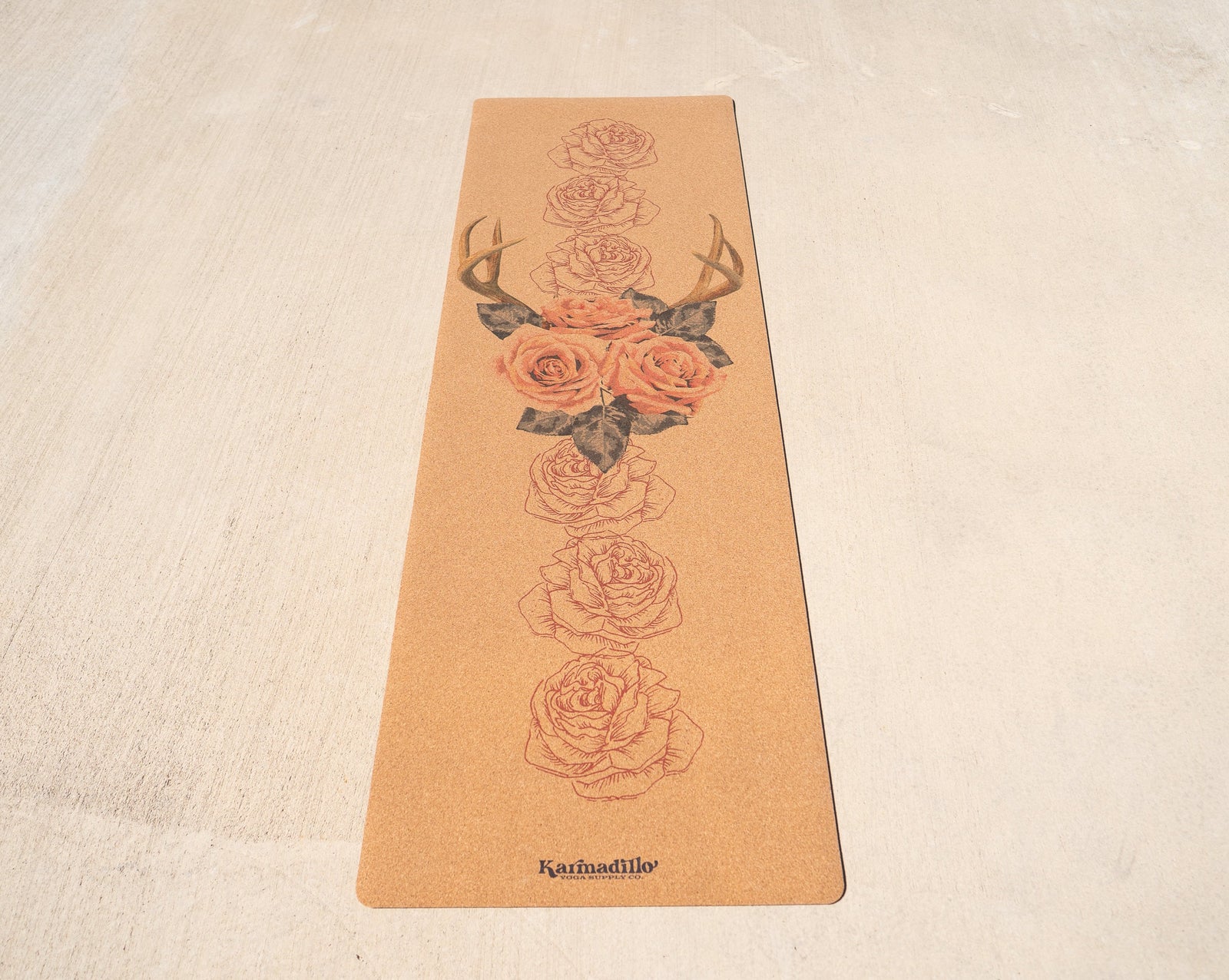
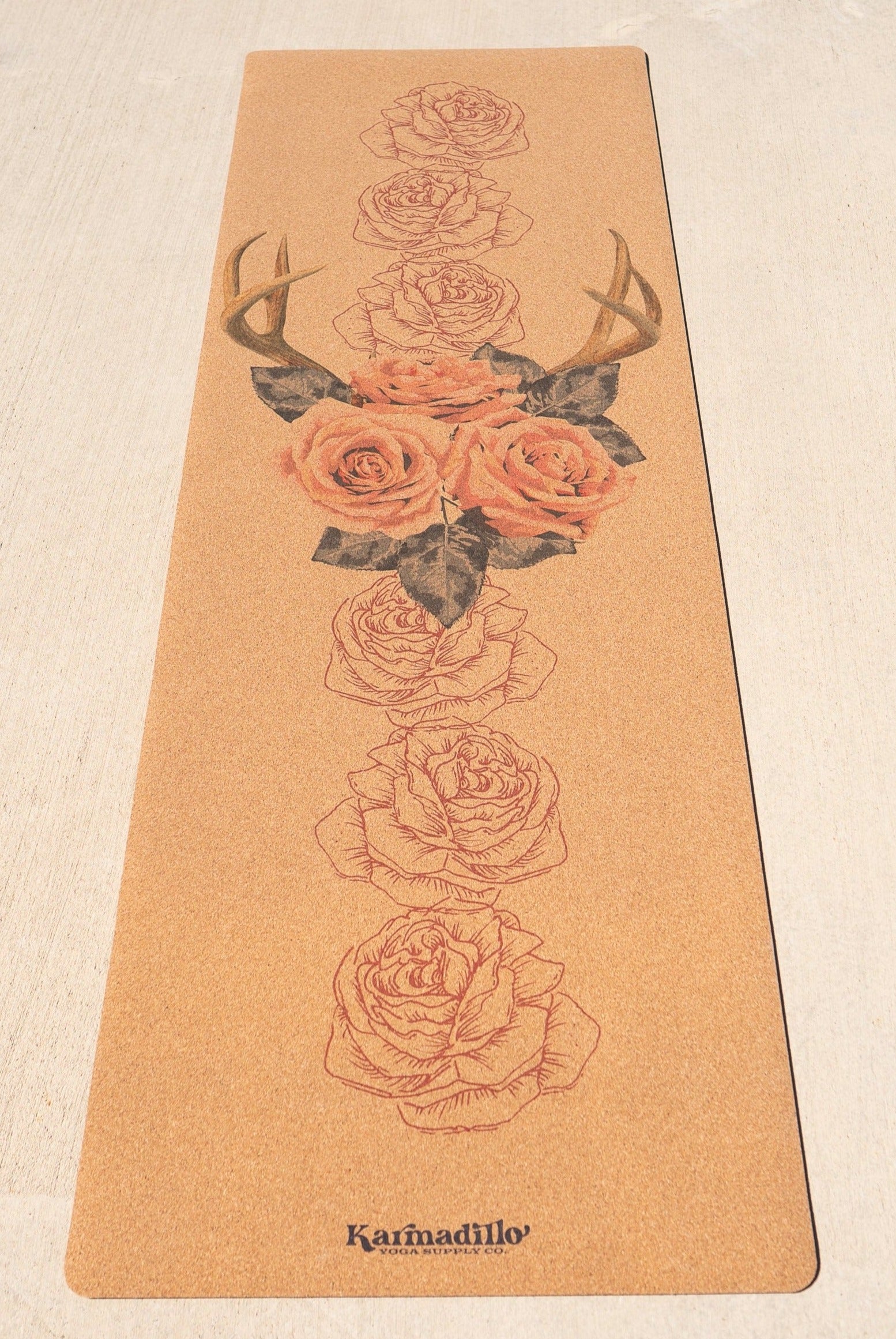
Cork offers a warm, velvety touch that feels soft under bare skin while remaining completely firm under heavy compression. Combined with limited-edition artist designs and non-toxic water-based inks, cork mats bring a refined aesthetic to any practice space.
Natural Tree Rubber Yoga Mats: Heavy-Duty Density and Traction
Natural rubber mats are manufactured using the harvested sap of the rubber tree (Hevea brasiliensis). They are praised by studio practitioners who demand heavy-duty floor adhesion and cushion rebound.
Superior Floor Adhesion and Stability
Natural rubber is exceptionally dense and heavy. When placed on hardwood or studio floors, a natural rubber base grips the floor with incredible force, preventing sliding or shifting during dynamic jump-throughs.
Dry Traction
When your hands are dry, natural rubber offers sticky surface traction. However, smooth closed-cell rubber surfaces can trap perspiration on the top layer during hot or sweaty classes, creating a slick film unless paired with a towel.
Environmental Footprint and Allergens
While natural rubber is a renewable resource and naturally biodegradable, it comes with two drawbacks:
-
Weight: Natural rubber mats are heavy, often weighing between 5.5 to 7.5 pounds, making them cumbersome for daily commuters.
-
Latex Content: Because natural rubber contains natural latex proteins, individuals with severe latex allergies cannot use pure rubber surfaces safely.
TPE (Thermoplastic Elastomer) Yoga Mats: The Lightweight Budget Alternative
TPE is a synthetic blend of plastic and rubber polymers created as an alternative to toxic Polyvinyl Chloride (PVC). TPE mats are commonly found in commercial department stores.
Ultra-Lightweight Portability
The primary advantage of TPE is its low density. A standard 6mm TPE mat weighs under 2 pounds, making it effortless to carry in a backpack.
Soft, Plush Cushioning
TPE mats offer a soft, marshmallow-like feel under foot. While comfortable for gentle stretching or low-impact restorative postures, this soft structure compresses under heavy pressure, reducing stability during standing balance postures.
Durability and Moisture Performance
Because TPE is a synthetic closed-cell foam, it cannot absorb or channel moisture. When sweat accumulates during a warm class, TPE surfaces become slick. Additionally, TPE degrades rapidly when exposed to sunlight or heat, often tearing or flaking within a year.
Head-to-Head Performance & Feature Comparison
To give you a side-by-side view of how these three primary yoga mat materials compare, review the detailed performance matrix below:
| Performance Metric | Natural Cork Yoga Mats | Natural Rubber Yoga Mats | TPE Synthetic Yoga Mats |
| Wet Grip (Sweat Traction) | Exceptional (Grip increases with moisture) | Moderate (Requires studio towel) | Poor (Becomes slick & slippery) |
| Dry Grip | Excellent (Velvety tactile traction) | Maximum (Immediate sticky feel) | Moderate (Soft synthetic feel) |
| Antimicrobial & Hygiene | Naturally Antimicrobial (Suberin protected) | Low (Requires regular washing) | Low (Traps oils on surface) |
| Floor Adhesion (Bottom Base) | High (Dense natural rubber base) | Maximum (Heavy natural rubber) | Low (Lightweight, slides easily) |
| Cushioning Stability | Firm & Grounded (Zero sinkage) | Dense & Responsive | Soft & Squishy (Sinks under weight) |
| Environmental Impact | Carbon Negative (Renewable tree bark) | Sustainable & Biodegradable | Synthetic Plastic/Rubber Blend |
| Chemical Toxicity & Off-Gassing | 100% Non-Toxic (Zero PVC or phthalates) | Low (Natural latex smell initially) | Low to Medium (Synthetic polymer) |
| Average Weight | Medium (~4.5 – 5.5 lbs) | Heavy (~6.0 – 7.5 lbs) | Ultra-Light (~1.8 – 2.5 lbs) |
| Durability & Lifespan | 3 to 5+ Years (Resists tearing) | 3 to 5 Years | 1 to 2 Years (Prone to flaking) |
How to Match Mat Material to Your Specific Practice Style
Different movement practices place unique demands on your mat surface. Here is how to select the best material based on your primary style of yoga:
For Hot Yoga, Bikram, and Dynamic Power Vinyasa
-
Recommended Material: Natural Cork
-
Why: Hot classes generate intense sweat. Synthetic and smooth rubber mats turn into slippery hazards without a towel. Cork’s moisture-activated suberin layer grips tighter as your body warms up, giving you complete stability without extra accessories.
For Gentle, Restorative, and Yin Yoga
-
Recommended Material: Natural Cork or High-Density Rubber
-
Why: Long-held passive floor postures require firm, comfortable support. A cork mat bonded to a natural rubber base provides a warm, organic surface that feels grounding and relaxing against the skin.
For Ashtanga and High-Impact Fitness Workouts
-
Recommended Material: Natural Cork with Rubber Base
-
Why: Jump-throughs, mountain climbers, and lunges require heavy-duty floor traction and high tear-resistance. The dense natural rubber foundation anchors the mat flat to the floor while the organic cork top layer withstands heavy foot friction.
Essential Care and Maintenance Guidelines for Cork Yoga Mats
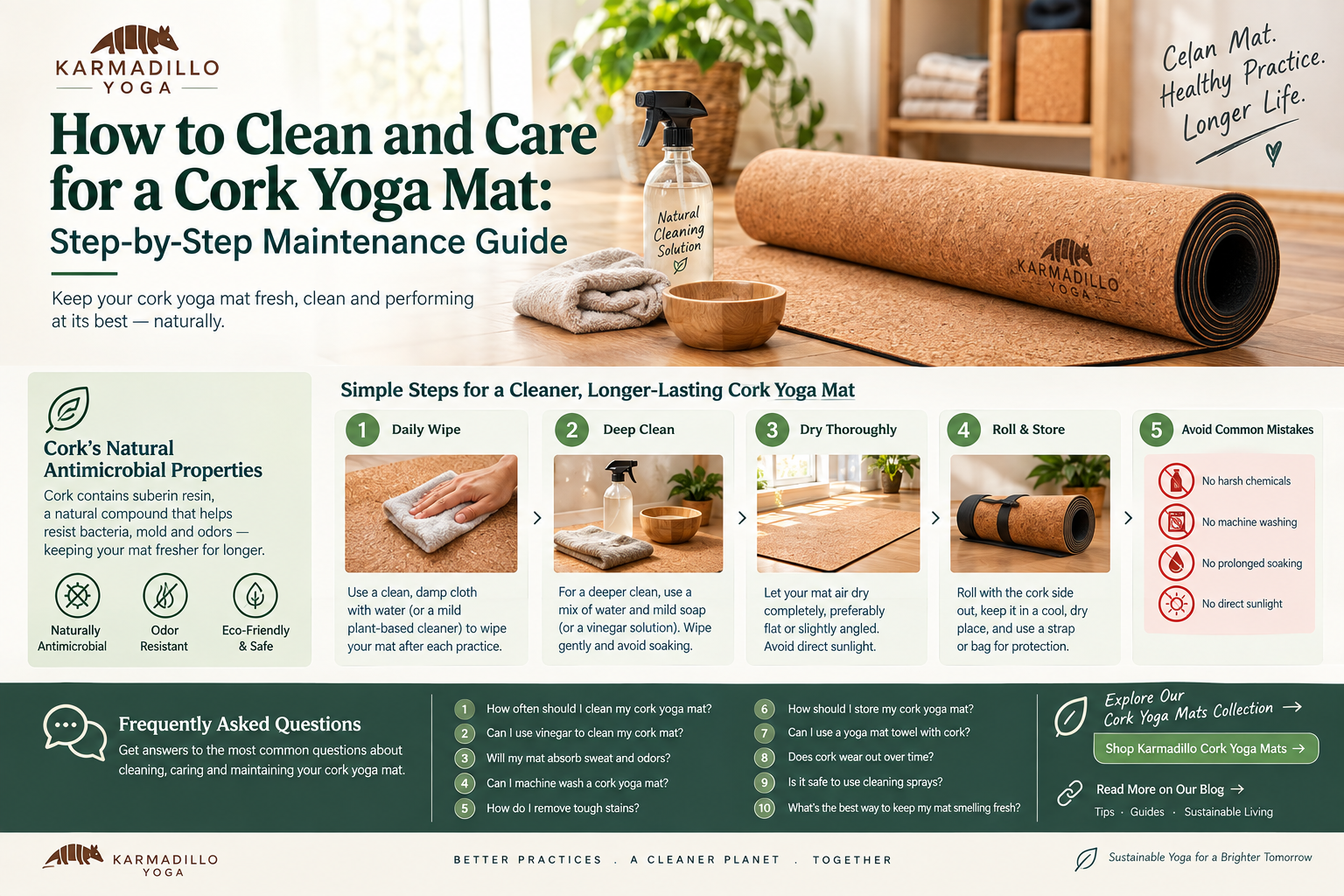
Because natural cork is an organic material, maintaining it requires simple, gentle care to preserve its natural grip and extend its lifespan.
Daily Post-Practice Habit
After every practice session, unroll your cork mat flat in a shaded, well-ventilated area for 10 to 15 minutes to allow surface moisture to air dry completely. Never roll up a damp or sweaty mat.
Weekly Cleaning Routine
-
Mix 1 cup of distilled water with a splash of organic white vinegar in a fine-mist spray bottle.
-
Lightly spray the entire cork surface from 12 inches away.
-
Gently wipe the surface with a soft, non-abrasive microfiber cloth.
-
Wipe a second time with a cloth dampened only with plain water to remove any vinegar scent.
-
Allow the mat to air dry fully in the shade.
The "Cork Side Out" Rolling Rule
Always roll your cork yoga mat with the cork surface facing OUTWARD and the rubber base facing INWARD. Rolling with the cork facing outward puts the organic fibers under gentle tension, keeping the surface smooth. Rolling with cork facing inward compresses the fibers against themselves, which can cause micro-creases or corner curling over time.
Why Choose Karmadillo Yoga Cork Mats?
At Karmadillo Yoga, we believe that your movement practice should be free from slippery distractions, harsh synthetic chemicals, and cheap mass-produced gear. Born in the vibrant wellness community of Austin, Texas, we craft premium, limited-edition cork yoga mats designed for high-performance practitioners and eco-conscious souls alike.
What Sets Karmadillo Yoga Mats Apart?
-
Organic Cork Top Layer: Sourced from sustainable Mediterranean Cork Oak bark, sanded to a smooth finish that activates grip as you sweat.
-
Heavy-Duty Natural Rubber Base: 100% natural, non-toxic tree rubber base that anchors firmly to any floor surface.
-
Limited Edition Artistic Prints: Printed with non-toxic, eco-friendly water-based inks that won't fade, bleed, or rub off during deep cleaning.
-
Specialized Sizes & Options: Choose from our flagship collections, including the Alignment Grid Cork Yoga Mat, the spacious Blue Moon Cork Mat Luxe Size 6mm, or the classic Blue Moon Cork Yoga Mat. You can even represent the community off the mat with our stylish Cork Trucker Hat!
To learn more about our founding story, environmental commitment, and mission, visit the About Karmadillo Yoga Page or explore our complete catalog in the Karmadillo All Products Collection. Stay up to date with fresh wellness tips and class guides on the Karmadillo Yoga News Blog.
Frequently Asked Questions (FAQs)
1. Why should I choose a cork yoga mat over rubber or TPE?
Cork offers a unique moisture-activated grip that improves as you sweat, natural antimicrobial hygiene, zero chemical off-gassing, and carbon-negative environmental sustainability that rubber and synthetic TPE cannot match.
2. Do cork yoga mats get slippery when hands are dry?
Cork traction is naturally subtle when dry and increases significantly as moisture rises. If your hands and feet are cold and dry at the start of class, lightly spraying your mat with a fine mist of water gives instant non-slip traction.
3. Do I need a studio towel for hot yoga if I use a cork mat?
No! Cork's natural suberin wax reacts with sweat to increase grip, completely eliminating the need for a separate microfiber towel during hot classes.
4. Are cork yoga mats heavy to carry to class?
Karmadillo cork yoga mats weigh between 4.5 to 5.5 pounds—lighter than solid dense rubber mats while providing superior floor adhesion and grounding stability.
5. Does the cork layer peel, flake, or crumble over time?
High-quality cork mats heat-bonded to natural rubber with non-toxic adhesives will not peel or crumble under normal use. Always roll your mat cork side facing out to preserve the smooth surface.
6. Is cork safe for people with sensitive skin or allergies?
Yes. Organic cork is hypoallergenic, antimicrobial, and completely free from toxic PVC, phthalates, synthetic plasticizers, and harsh chemical solvents.
7. How long does a quality cork yoga mat last?
With proper daily drying, gentle weekly cleaning, and cork-side-out storage, a premium cork yoga mat from Karmadillo Yoga will last between 3 to 5 years of daily practice.
8. Does a new cork yoga mat have a strong chemical smell?
No. Unlike plastic PVC or TPE mats that off-gas chemical fumes, new cork mats have a pleasant, subtle woody aroma from natural cork and tree rubber that fades within a few days.
9. Can I use my cork yoga mat outdoors on grass or decks?
Yes! Cork mats perform wonderfully outdoors. Just ensure the surface is free of sharp rocks, and avoid leaving the mat in intense, direct mid-day sunlight for extended periods.
10. Where can I buy wholesale cork yoga mats for my studio?
Karmadillo Yoga is a premier fitness equipment wholesaler based in Austin, Texas. You can reach out directly via our Contact Page or call our local studio team at +1 512-758-2601.
Ready to Elevate Your Practice? Connect With Karmadillo Yoga Today!
Upgrade your movement space with sustainable, non-slip cork gear built to support your deepest flows. Whether you are an individual practitioner looking for your forever mat or a studio owner seeking premium wholesale equipment, our team in Austin, Texas is here to assist you.
Contact Information & Wholesale Inquiries
-
Company Name: Karmadillo Yoga
-
Business Category: Fitness Equipment Wholesaler & Sustainable Yoga Brand
-
Store & Showroom Address: 1600 S 1st St, Austin, TX 78704, United States
-
Direct Phone Support: +1 512-758-2601
-
Online Contact Portal: Visit our Contact Us Page
-
Official Website: https://karmadilloyoga.com/
-
Instagram Community: Follow us @karmadilloyoga for pop-up event updates, wellness tips, and limited-edition product releases!








We’d love to hear your thoughts!